
Concrete coating colors determine how your Tucson property looks and feels the moment someone pulls into the driveway or steps onto the patio. Picking the right shade does more than boost curb appeal. It also affects surface temperature, UV fade resistance, and long-term durability in the Sonoran Desert climate. With over 300 days of sunshine per year, Tucson homeowners need tones that hold up under relentless sun exposure while complementing the natural desert landscape.
Why Your Choice of Concrete Coating Colors Matters in Tucson
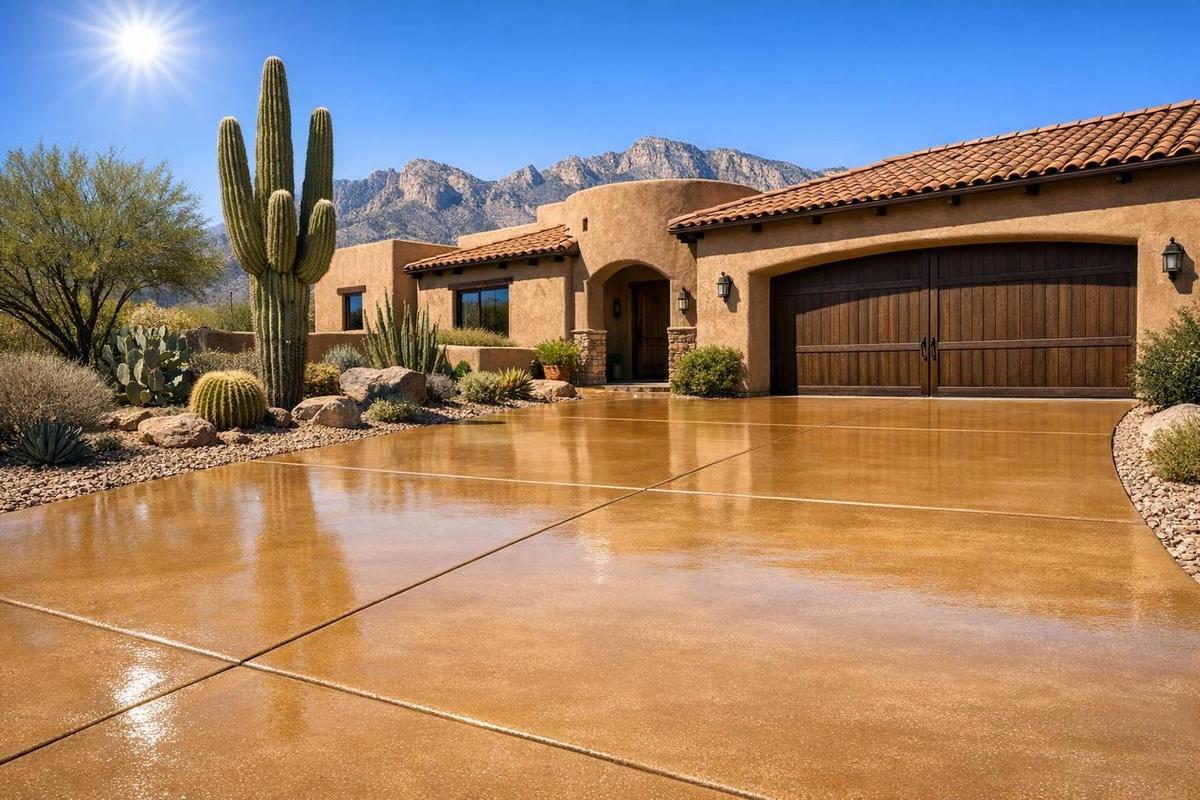
Color selection is a performance decision, not just an aesthetic one. Lighter shades reflect more solar radiation and keep surfaces cooler underfoot, which matters when summer ground temperatures in Tucson regularly exceed 150 degrees Fahrenheit. Darker tones absorb heat and can become uncomfortable on bare feet around pool decks or patios.
Beyond temperature, pigment quality affects how long the finish looks fresh. Low-grade pigments fade within 2 to 3 years under constant UV bombardment. Professional-grade systems use iron oxide and titanium dioxide pigments that resist fading for 7 to 10 years before needing a refresh. I’ve seen homeowners pick a bargain product only to watch it chalk and lose vibrancy in a single Arizona summer. Spending a bit more on pigment quality saves money over time.
There’s also the property value angle. A well-chosen surface finish ties together landscaping, architecture, and hardscape into a cohesive look. Real estate agents in the Tucson market consistently note that homes with finished exterior surfaces sell faster than those with plain gray slabs.
The desert environment creates specific challenges that influence which tones perform best. Dust storms deposit a fine layer of caliche-colored sedite on every horizontal surface. Shades that sit close to that natural dust tone (tans, warm browns) hide accumulation between cleanings far better than stark whites or deep blacks. That’s a practical detail most out-of-state suppliers won’t mention.
5 Best Color Options for Tucson Homes
These five shades work especially well in the desert Southwest because they balance heat reflectivity, fade resistance, and visual harmony with the surrounding terrain. Each one suits different architectural styles and outdoor spaces.
Desert Sand
Desert Sand is the most requested tone among Tucson homeowners, and for good reason. Its warm, sandy hue blends naturally with the surrounding Sonoran landscape while reflecting enough sunlight to stay comfortable on bare feet. This shade pairs well with Spanish Colonial, Territorial, and modern Southwest architecture.
Best applications include driveways, walkways, patios, and decorative outdoor living areas. The neutral warmth means it rarely clashes with exterior paint or stone accents. One practical tip: request a sample chip and hold it against your home’s stucco in direct afternoon sun before committing. Screen colors never match real-world desert light conditions.
Adobe Brown
Adobe Brown is a rich earth tone that mimics the look of traditional sun-dried adobe brick. It’s a popular pick for homes with desert-inspired architecture because it adds depth and warmth without feeling heavy. The darker pigment hides tire marks and foot traffic stains better than lighter shades, which makes it a smart choice for high-traffic driveways.
This hue works on patios, walkways, pool surrounds, and landscaping borders. One thing to keep in mind: Adobe Brown absorbs more solar energy than lighter options. If you plan to use it on a pool deck where people walk barefoot, consider pairing it with a polyaspartic topcoat, which is a fast-curing protective layer that adds slip resistance and a cooler surface feel.
Terracotta Orange
Terracotta brings a bold, warm-toned energy that stands out from the typical earth palette. It’s inspired by fired clay pottery and has roots in traditional Southwestern design going back centuries. This shade is ideal for homeowners who want a pop of personality without going too far from natural desert tones.
Use it on accent areas like front porches, courtyard floors, or garden pathways. Pairing terracotta with neutral trim tones (cream, tan, or soft gray) keeps it from overwhelming the space. In my experience working with Tucson clients, terracotta looks best on smaller surface areas where it acts as a visual focal point rather than a wall-to-wall application.
Rustic Red
Rustic Red offers a deep, classic look that contrasts beautifully with the pale desert landscape. This shade works well on homes with brick, stone, or dark wood accents. The pigment holds up under UV exposure better than you might expect because iron oxide (the base pigment in most reds) is naturally UV-stable.
It’s a strong fit for entryways, garage aprons, and accent borders around driveways. Rustic Red also pairs well with stained flooring finishes for homeowners who want a cohesive indoor-outdoor transition. The key maintenance note: red pigments show white efflorescence (mineral salt deposits) more visibly than darker tones, so proper sealing during installation is critical.
Southwest Sun
Southwest Sun blends warm orange and golden yellow tones to capture the look of a Tucson sunset. It’s the most vibrant option on this list and suits homeowners who want their outdoor space to make a statement. The UV-resistant pigment formula holds its vibrancy longer than standard yellows, which tend to fade quickly in direct sunlight.
This shade works best on patios, pool decks, sidewalks, and outdoor entertainment areas. One practical consideration: Southwest Sun shows dirt and dust more readily than earth tones. Regular rinsing with a garden hose (every 2 to 3 weeks during dust season) keeps it looking sharp. If routine surface maintenance isn’t your thing, a darker alternative may be a better fit.
How to Pick the Right Shade for Your Property
Selecting the best option comes down to four factors: sun exposure, intended use, architectural style, and personal maintenance tolerance. Here’s a simple decision framework:
- Evaluate sun exposure. South-facing and west-facing surfaces get the most direct heat. Lighter tones (Desert Sand, Southwest Sun) keep those areas cooler.
- Consider traffic patterns. High-traffic zones like driveways and garage floors benefit from mid-range tones (Adobe Brown, Rustic Red) that mask wear and stains.
- Match your architecture. Hold physical sample chips against your exterior walls in natural light. Screen-based previews are unreliable in desert conditions.
- Think about maintenance. Lighter and more vivid shades show dust and dirt faster. Darker earth tones stay cleaner-looking between washings.
If you can’t decide between two options, ask your installer for a small test patch on an inconspicuous area. Most professional applicators will do this at no extra charge, and it removes all guesswork.
Another factor worth considering: flake blends versus solid tones. Decorative chip systems scatter multicolored vinyl flakes into the wet base layer, creating a granite-like appearance that hides imperfections and adds texture. Solid pigment applications deliver a cleaner, more uniform look but show surface blemishes more readily. Both options come in the full range of desert-friendly palettes.
Coating Types That Affect Color Performance
The base material you choose determines how the pigment looks and how long it lasts. There are three primary systems used in Tucson, and each handles color differently.
| System Type | Color Range | UV Stability | Best For |
|---|---|---|---|
| Epoxy | Wide (50+ shades) | Moderate, can yellow | Garage floors, indoor areas |
| Polyurea | Moderate (30+ shades) | High | Driveways, outdoor slabs |
| Polyaspartic | Wide (50+ shades) | Excellent | Pool decks, patios, high-UV areas |
Epoxy is the most affordable option and offers the widest palette, but it can yellow or amber when exposed to UV light. That makes it a better fit for enclosed garage floors than outdoor patios. Polyurea systems cure faster and resist UV degradation, while polyaspartic finishes provide the best outdoor color retention and are the go-to choice for professional-grade exterior applications in the desert.
One mistake I see repeatedly: homeowners pick a gorgeous shade in an epoxy formula, apply it to their patio, and then wonder why it turned yellowish within 6 months. Always match the system type to the environment, not just the swatch book.
Eco-Friendly and Low-VOC Options
VOCs (volatile organic compounds) are chemicals released during application that can affect indoor air quality and the surrounding environment. Tucson’s dry climate means fumes dissipate faster outdoors, but enclosed spaces like garages still need low-VOC formulas for safe application.
Several manufacturers now offer water-based formulas with VOC levels below 50 grams per liter, which meets or exceeds EPA and safety standards for residential use. These products perform comparably to solvent-based systems in terms of durability and color vibrancy. The tradeoff is a slightly longer cure time (24 to 48 hours versus 6 to 12 hours for solvent-based products).
Choosing a low-VOC product doesn’t mean sacrificing your preferred shade. Most eco-friendly lines carry the same popular tones, including all five options listed above.
What to Expect During Professional Installation
A typical residential project in Tucson takes 1 to 3 days depending on surface area, prep work required, and the system selected. Here’s the general process:
- Surface preparation. The installer grinds or shot-blasts the slab to create a rough profile for adhesion. Cracks get filled with flexible filler.
- Primer application. A bonding primer goes down first. This layer is usually clear or neutral-toned.
- Base layer with pigment. The colored material gets applied in one or two passes depending on opacity and thickness requirements.
- Topcoat and finish. A clear UV-resistant topcoat seals the pigment and adds either a matte, satin, or gloss finish.
- Cure time. Light foot traffic is typically allowed after 24 hours. Full vehicle traffic may require 48 to 72 hours depending on the formula.
Temperature and humidity affect cure rates. In Tucson’s summer heat, many installers schedule projects for early morning or apply during cooler months when conditions allow optimal bonding and longer working time.
Concrete Coating Colors: Start Planning Your Project
Start by narrowing your options to 2 or 3 shades that match your home’s exterior and your lifestyle. Request physical samples from your installer and test them in direct Tucson sunlight before finalizing. If you’re unsure which system type fits your space, ask a local applicator to evaluate your slab condition and sun exposure. The right combination of shade and formula will keep your surfaces looking sharp for years without constant upkeep.
Frequently Asked Questions About Concrete Coating Colors
What is the most popular concrete coating color in Tucson?
Desert Sand is the most popular choice in the Tucson area. Its warm, neutral tone blends with the surrounding Sonoran Desert landscape and works with most architectural styles common in southern Arizona.
Do concrete coating colors fade in the Arizona sun?
Fading depends on the pigment quality and the system type. Professional-grade polyaspartic and polyurea systems with iron oxide pigments resist UV fading for 7 to 10 years. Budget epoxy formulas can yellow or chalk within 1 to 2 years of outdoor sun exposure.
Can I change the color of my existing coated surface?
Yes, most surfaces can be recoated with a new shade after light sanding or abrasion to create a bonding profile. The existing layer does not need full removal unless it is peeling or delaminating. A professional installer can assess whether a recoat or full strip is needed.
Are lighter or darker shades better for pool decks?
Lighter shades are generally better for pool decks because they reflect more solar heat and stay cooler underfoot. Desert Sand and Southwest Sun are the two most common picks for pool surrounds in Tucson due to their heat-reflective properties.
How much does a colored surface application cost in Tucson?
Residential projects in the Tucson area typically range from $3 to $7 per square foot depending on the system type, surface prep requirements, and total area. Polyaspartic systems sit at the higher end of that range, while basic epoxy is the most affordable.