
Decorative concrete is standard concrete that has been enhanced with color, texture, or pattern to mimic materials like stone, brick, slate, or wood. For Tucson homeowners, it solves a specific problem: how to get attractive outdoor and indoor surfaces that won’t buckle under 100-degree summers or monsoon rain. Unlike pavers that shift on sandy desert soil, a properly poured slab stays put. And unlike natural stone, you won’t pay $15 to $30 per square foot for materials alone.
So what makes it “decorative”? The transformation happens through one of four main techniques: stamping, staining, overlays, or exposed aggregate. Each method changes the finished look without sacrificing the structural strength you already get from a standard pour. The rest of this page breaks down how each technique works, where Tucson homeowners use them most, and what the real costs look like.
How Decorative Concrete Techniques Work in Tucson
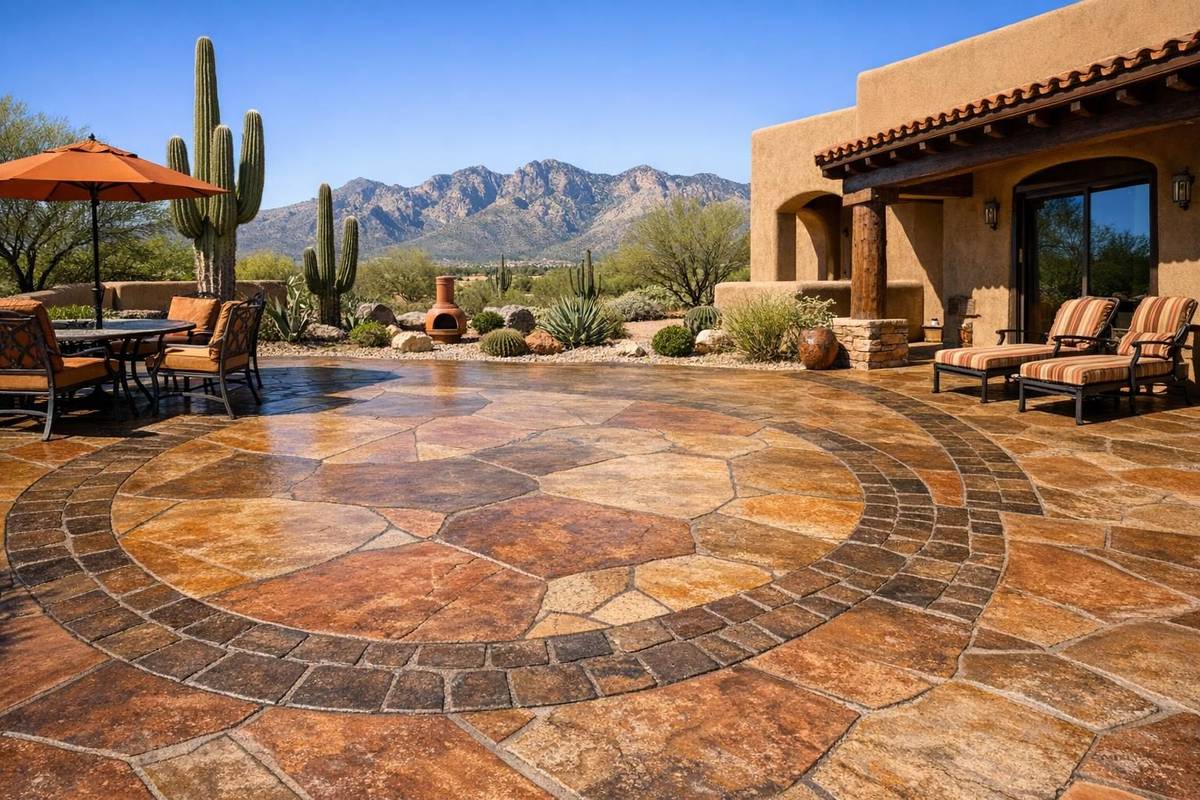
Four primary methods turn a plain gray slab into something worth looking at. Tucson contractors typically recommend one based on whether you’re working with a new pour or an existing surface.
Stamped Concrete
Stamped concrete uses textured mats pressed into freshly poured material before it cures. The stamps replicate patterns like flagstone, cobblestone, brick, or tile. A release agent prevents sticking and adds a secondary color layer. Most Tucson patios and driveways use this method because it handles full sun exposure without the color fading you’d get from cheaper surface-applied treatments. One thing installers won’t always mention: stamp depth matters. Shallow impressions wear down faster under foot traffic. Ask for a minimum 1/4-inch impression depth on any walkway or pool deck.
Stained and Dyed Surfaces
Acid stains react chemically with the lime content in cured material, producing translucent, variegated earth tones. Water-based stains offer a wider color palette (including blues and greens) without the chemical reaction, so the results are more uniform. Tucson’s dry climate actually helps here. Low humidity means faster cure times for sealers applied over stain, which reduces the risk of moisture trapping that causes cloudiness. For more detail on this approach, see our guide on stamping and staining techniques.
Overlays and Microtoppings
Overlays are polymer-modified cement coatings applied over existing slabs. They range from 1/16-inch microtoppings (for indoor floors) to 3/8-inch stampable overlays (for outdoor areas). This is the go-to option when the existing slab is structurally sound but visually worn. A good overlay bonds at 300+ PSI and can handle Tucson’s thermal cycling, where surface temperatures swing from 160 degrees at midday to 75 degrees after sunset.
Exposed Aggregate
Exposed aggregate involves washing away the top layer of cement paste before it fully cures, revealing the stones mixed into the slab. The look depends entirely on the aggregate selected. Tucson contractors often use locally sourced river rock or Sonoran pebble blends for a natural desert appearance. The textured surface also provides better traction around pools, which is why it remains one of the most requested finishes for pool decks in southern Arizona.
Where Tucson Homeowners Use Decorative Finishes Most
Certain areas of a Tucson property benefit more from enhanced surfaces than others. Here are the five most common applications local contractors install.
- Driveways: Stamped or colored driveways replace plain gray slabs that crack and discolor in UV exposure. A standard two-car driveway costs $8 to $18 per square foot with decorative finishing, compared to $4 to $8 for plain gray.
- Patios and pool decks: Cool-deck coatings and lighter stain colors reduce surface temperature by up to 30 degrees, which matters when barefoot traffic is the norm from April through October.
- Interior floors: Polished or stained indoor flooring works with Tucson’s radiant heat systems and stays cool underfoot during summer months. Check our page on stained flooring options for specifics.
- Walkways and entryways: Stamped paths with desert-tone coloring create curb appeal that real estate agents say adds measurable resale value.
- Outdoor kitchens and fire features: Heat-resistant overlays and polished countertops withstand direct flame exposure and Tucson’s extreme temperature swings.
If you’re exploring visual options for your property, our idea gallery shows examples of finished projects across Tucson neighborhoods.
Real Costs and Lifespan in the Tucson Climate
Cost per square foot varies by technique. Here’s what Tucson homeowners typically pay in 2026.
| Technique | Cost Per Sq Ft | Expected Lifespan | Maintenance Level |
|---|---|---|---|
| Stamped | $8 to $18 | 25 to 30 years | Reseal every 2-3 years |
| Acid Stain | $3 to $8 | 20+ years | Reseal every 3-5 years |
| Overlay | $5 to $12 | 15 to 25 years | Reseal every 2-4 years |
| Exposed Aggregate | $6 to $14 | 25+ years | Reseal every 3-5 years |
| Polished Interior | $3 to $10 | 20+ years | Buff and reseal every 5-7 years |
One factor unique to Tucson: UV degradation accelerates sealer breakdown. The American Concrete Institute, the leading standards body for structural and finishing practices, recommends UV-stable sealers for any surface receiving more than 6 hours of direct sunlight daily. In Tucson, that’s almost every horizontal surface on your property. Skipping UV-rated sealer is the single most common mistake local homeowners make, and it cuts the reseal interval in half.
For a deeper look at protective finishes and how long they hold up, see our article on coating longevity.
Maintenance That Actually Matters in Desert Conditions
Forget the generic “just sweep and hose it down” advice. Tucson’s environment creates three specific maintenance challenges that other climates don’t.
- Dust accumulation in stamp joints. Fine desert dust packs into textured impressions. A pressure washer at 1,500-2,000 PSI clears it without damaging the sealer. Do this twice a year, once after monsoon season and once in spring.
- Sealer reapplication timing. Check your sealer by dropping water on the surface. If it absorbs instead of beading, the sealer has failed. In Tucson, this typically happens every 2 to 3 years on sun-exposed surfaces.
- Efflorescence from hard water. Tucson’s water contains high mineral content. White salt deposits can appear on stained surfaces after cleaning. Use a pH-neutral cleaner specifically designed for finished surfaces, not vinegar or muriatic acid, which strip stain and sealer.
Our full maintenance guide covers seasonal care schedules for both indoor and outdoor surfaces.
Choosing the Right Technique for Your Tucson Project
The best method depends on three things: whether you’re working with new or existing surfaces, your budget per square foot, and the amount of direct sun exposure the area receives.
New pours give you the most options. Stamping and integral color both require fresh material, so plan them into the pour from the start. Retrofitting an existing patio or driveway? Overlays and stains work on cured slabs without requiring demolition. That distinction alone saves most homeowners $2 to $5 per square foot in removal costs.
Color selection matters more in Tucson than in cooler climates. Darker stains absorb heat and can push surface temperatures above 170 degrees in July. Lighter earth tones (sandstone, buff, desert tan) reflect more UV radiation and stay 20 to 35 degrees cooler. If the surface will see bare feet, go lighter.
Contractors in this area should hold a valid ROC license from the Arizona Registrar of Contractors, the state agency that oversees construction licensing. Ask for it before signing. Also ask about the specific mix design they’ll use. A 4,000 PSI mix is standard for residential slabs in southern Arizona, but some contractors cut costs with 3,000 PSI mixes that don’t hold up as well under thermal cycling. For a broad overview of finish types beyond just colors, browse our coating types page.
Start Your Decorative Concrete Project the Right Way
Get quotes from at least three licensed Tucson contractors before committing. Ask each one to specify the mix PSI, sealer type, and warranty terms in writing. Visit a finished project site if possible, because photos don’t show how a stamped pattern looks after two summers of UV exposure. Request a sample board with your chosen color and pattern applied, then leave it in direct sun for a week to see how it holds. That one step prevents more buyer’s remorse than anything else in this trade.
Frequently Asked Questions About Decorative Concrete
How long does decorative concrete last in Tucson’s climate?
Most decorative finishes last 20 to 30 years when properly sealed and maintained. Stamped surfaces and exposed aggregate are the most durable options, often exceeding 25 years. The key variable is sealer maintenance: reapply every 2 to 3 years on sun-exposed surfaces to prevent UV degradation.
Is decorative concrete slippery when wet?
Textured finishes like stamped patterns and exposed aggregate provide good traction even when wet. Smooth polished or heavily sealed surfaces can be slippery, but adding a non-slip additive to the final sealer coat solves this. Around pools, most Tucson contractors apply a broadcast aggregate finish that meets slip-resistance standards.
Can you apply decorative finishes to existing slabs?
Yes. Overlays, stains, and dyes all work on existing cured material as long as the slab is structurally sound with no major cracks or heaving. An overlay bonds directly to the old surface and can be stamped or textured. This approach costs 30% to 50% less than tearing out and replacing the slab.
What does decorative concrete cost per square foot in Tucson?
Prices range from $3 per square foot for a basic acid stain to $18 per square foot for complex stamped patterns with multiple colors. The average Tucson patio project falls between $8 and $14 per square foot, including material, labor, and sealer. Get at least three quotes because pricing varies significantly between contractors.
Does decorative concrete increase home value?
Upgraded outdoor surfaces consistently rank among the top exterior improvements for return on investment. Real estate appraisers in the Tucson market note that finished patios and driveways add perceived value, especially in neighborhoods where plain gray slabs are the norm. The ROI depends on the neighborhood, but well-executed work typically recoups 50% to 70% of its cost at resale.