
Types of Concrete Coatings for Tucson Homes and Businesses
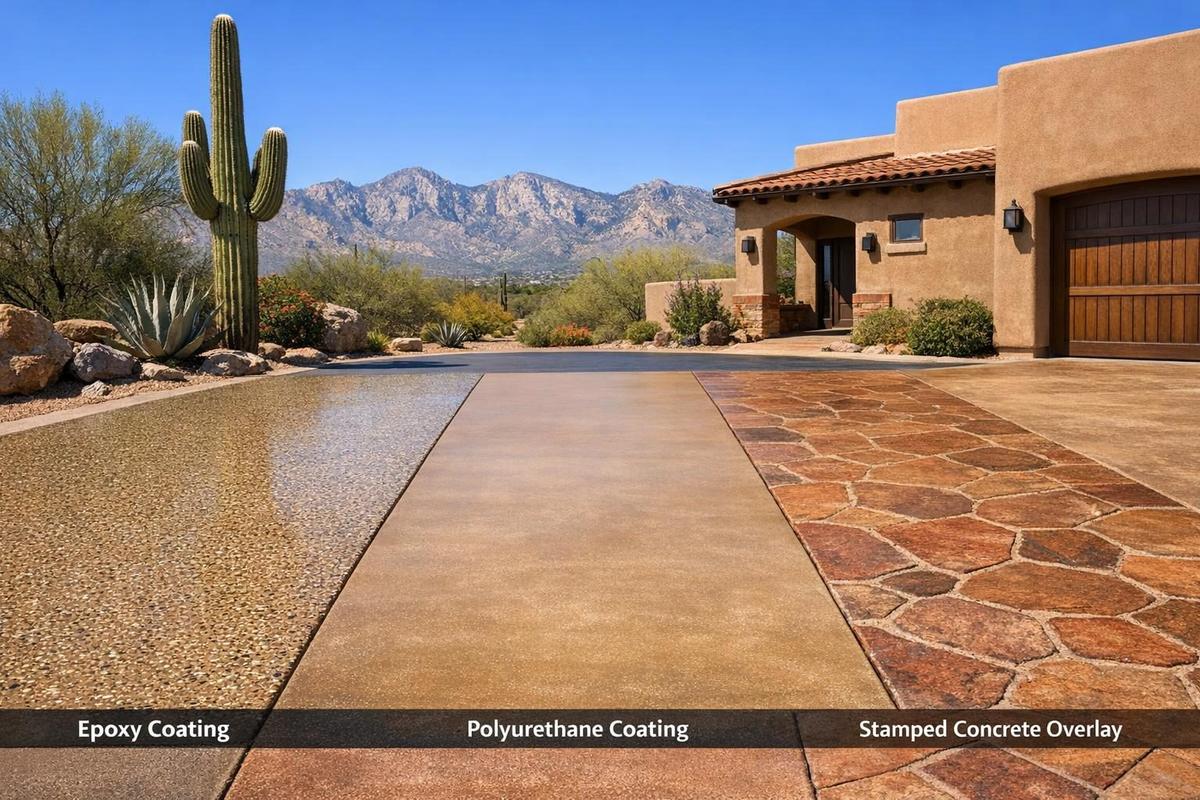
Tucson homeowners face a unique challenge. The desert sun, monsoon storms, and extreme temperature swings all punish exposed surfaces. Types of concrete coatings offer the protection and visual upgrade that local properties need to hold up under these conditions. Choosing the right product for your garage floor, patio, or driveway starts with understanding what each option does well and where it falls short.
This guide breaks down the four main categories used across residential and commercial projects in the Tucson area: epoxy, polyurethane, acrylic, and polyaspartic. You’ll also find a comparison table, selection criteria based on real job-site experience, and answers to questions contractors hear most often.
- Types of Concrete Coatings for Tucson Homes and Businesses
- Why Surface Protection Matters in Tucson's Climate
- Epoxy Floor Coatings
- Polyurethane Protective Coatings
- Acrylic Sealers and Coatings
- Polyaspartic Coatings
- Side-by-Side Comparison of Coating Types
- How to Choose the Right Product for Your Project
- Maintenance Tips for Long-Lasting Results
- Frequently Asked Questions About Types of Concrete Coatings
- What is the most durable type of floor coating for a Tucson garage?
- Can you apply epoxy outdoors in Tucson?
- How long does it take to install a floor coating system?
- What surface prep do Tucson floors need before coating?
- How do I pick between polyurethane and polyaspartic?
- Are decorative options available with protective floor systems?
Why Surface Protection Matters in Tucson’s Climate
Unprotected floors and driveways in southern Arizona degrade faster than most homeowners expect. UV exposure in Tucson averages over 300 sunny days per year, which breaks down bare surfaces through a process called photo-oxidation. Add monsoon moisture that seeps into pores and then evaporates rapidly, and you get spalling, scaling, and surface erosion within a few seasons.
A properly applied protective layer blocks moisture penetration, resists UV damage, and prevents chemical staining from oil or pool chemicals. The right product can extend a slab’s functional life by 10 to 15 years. One mistake I see repeatedly on Tucson job sites is homeowners skipping surface prep, then blaming the product when it peels within six months. Prep matters more than brand.
If you want to understand how long concrete coatings last under local conditions, the answer depends almost entirely on the product category, surface preparation quality, and ongoing maintenance routine.
Epoxy Floor Coatings
Epoxy is a two-part system that combines a resin with a hardener to create a rigid, chemical-resistant film. It bonds directly to prepared surfaces and cures into a hard shell that handles heavy loads, hot tire pickup, and chemical spills. This makes epoxy one of the most common choices for garage floors, warehouse spaces, and commercial kitchens across Tucson.
How Epoxy Works
The two components react through an exothermic chemical process once mixed together. Pot life is typically 30 to 45 minutes at Tucson’s summer temperatures, which means working quickly is essential. Professionals apply epoxy in two layers: a primer coat that penetrates the pores, followed by a topcoat that provides the finished surface. Some installers add decorative flake chips or quartz aggregate between layers for texture and slip resistance.
Strengths and Limitations of Epoxy
Epoxy excels in three areas: chemical resistance, compressive strength, and adhesion. A properly applied epoxy floor in a Tucson garage can handle dropped tools, road salt tracked in from winter trips, and hydraulic fluid without showing damage.
The downsides are worth knowing. Epoxy yellows under prolonged UV exposure, so it performs poorly on outdoor surfaces that get direct sunlight. It can also become slippery when wet unless you add anti-slip aggregate during application. Cure times run 24 to 72 hours depending on temperature and humidity, which means the space stays out of service longer than with faster-curing alternatives.
For spaces where slip resistance is a priority, pairing epoxy with a textured broadcast aggregate solves the traction problem effectively.
Polyurethane Protective Coatings
Polyurethane is a flexible, UV-stable finish that outperforms epoxy in outdoor applications and areas exposed to sunlight. It comes in both solvent-based and water-based formulations, each suited to different project requirements. Polyurethane works best as a topcoat over an epoxy base, combining the adhesion strength of epoxy with the flexibility and UV resistance of urethane.
Where Polyurethane Excels
Three properties set polyurethane apart from other options:
- UV stability that prevents yellowing and chalking on sun-exposed surfaces
- Flexibility that allows the film to expand and contract with temperature swings without cracking
- Abrasion resistance that holds up under forklift traffic and heavy equipment
In Tucson’s climate, that UV stability is a genuine advantage. Outdoor patios, pool decks, and driveways benefit from polyurethane’s ability to maintain color and gloss over 5 to 10 years. Solvent-based formulas provide a thicker film build and stronger chemical resistance, while water-based versions have lower VOC emissions and faster dry times.
Polyurethane Costs and Considerations
Material costs run higher than epoxy or acrylic, typically $3 to $7 per square foot installed in the Tucson market. Polyurethane also requires a clean, properly primed substrate. Applying it directly over bare, unprepared surfaces leads to adhesion failure. Most professionals recommend an epoxy primer beneath the polyurethane topcoat for maximum durability.
Acrylic Sealers and Coatings
Acrylic is the entry-level option that balances affordability with decent UV resistance. It forms a thin, breathable film that enhances the natural look of the surface beneath it. Stained concrete flooring pairs well with acrylic sealers because the transparent finish lets the color show through while adding a subtle sheen.
Best Uses for Acrylic
Acrylic products work well on decorative surfaces, low-traffic patios, and stamped or colored slabs where appearance matters more than heavy-duty protection. They dry fast, often within 1 to 2 hours, and you can apply them with a standard roller or pump sprayer. Reapplication every 2 to 3 years keeps the finish looking fresh.
The tradeoff is durability. Acrylic films are thinner and softer than epoxy or polyurethane, which means they wear down faster under vehicle traffic or heavy foot traffic. They also don’t resist chemicals as effectively. For a garage floor or commercial space, acrylic alone isn’t the right pick.
Polyaspartic Coatings
Polyaspartic is a newer category that has gained popularity for one compelling reason: cure time. A full polyaspartic system can go from bare slab to finished floor in a single day, which makes it the fastest option for projects where downtime matters.
Performance Characteristics
Polyaspartic products combine the UV stability of polyurethane with the hardness of epoxy. They cure through a chemical reaction that isn’t affected by temperature or humidity the way epoxy is, which gives them a major advantage in Tucson’s hot, dry summers. A polyaspartic floor applied at 7 a.m. can handle foot traffic by 4 p.m. the same day.
Other notable traits include:
- Excellent abrasion resistance that handles vehicle traffic and heavy equipment
- Strong adhesion to properly prepared substrates
- Color stability that resists yellowing and fading over 8 to 15 years
- Low VOC formulations available for indoor applications
Is Polyaspartic Worth the Higher Price?
Polyaspartic materials cost more per square foot than epoxy or acrylic. Installed prices in Tucson range from $5 to $10 per square foot depending on system thickness and decorative options. The speed advantage offsets some of that cost for commercial clients who can’t afford to shut down operations for 3 to 5 days during an epoxy cure cycle. For residential garages, the one-day turnaround appeals to homeowners who need their parking space back quickly.
Side-by-Side Comparison of Coating Types
This table summarizes how the four main product categories stack up across the factors that matter most for Tucson projects:
| Feature | Epoxy | Polyurethane | Acrylic | Polyaspartic |
|---|---|---|---|---|
| UV Resistance | Low (yellows) | High | Moderate | High |
| Cure Time | 24-72 hours | 12-24 hours | 1-2 hours | 4-6 hours |
| Durability | High | High | Moderate | Very High |
| Chemical Resistance | Excellent | Good | Low | Excellent |
| Cost per Sq Ft (installed) | $2-$5 | $3-$7 | $1-$3 | $5-$10 |
| Best For | Garages, warehouses | Outdoor surfaces, topcoats | Decorative, low traffic | Fast-turnaround projects |
If you’re exploring concrete coating colors and finishes, all four product categories accept pigments and decorative additives, though the color retention varies based on UV stability.
How to Choose the Right Product for Your Project
Picking the best option comes down to five factors: location, traffic level, budget, cure time requirements, and visual goals. Here’s a practical decision framework based on what actually works on Tucson job sites.
Indoor vs. Outdoor Location
Outdoor surfaces need UV-stable products. Epoxy alone fails outdoors because it yellows and chalks. Polyurethane, polyaspartic, or acrylic all handle sun exposure. For indoor spaces like garages, workshops, or basements, epoxy delivers the best value for the protection level.
Traffic and Load Requirements
A residential patio that sees occasional foot traffic doesn’t need the same product as a commercial warehouse floor. Match the product to actual use:
- Light foot traffic (patios, pool decks): acrylic or polyurethane
- Vehicle traffic (garages, driveways): epoxy or polyaspartic
- Heavy industrial loads (warehouses, manufacturing): polyaspartic or epoxy with polyurethane topcoat
Budget Priorities
Acrylic costs the least upfront but needs reapplication every 2 to 3 years. Epoxy offers the best durability per dollar for indoor use. Polyaspartic costs more initially but its longevity often makes it cheaper over a 10-year period. Run the math on total cost of ownership, not just the first application price.
Surface Preparation Requirements
Every product requires clean, profiled substrate for proper adhesion. The Tucson-specific challenge is caliche, the calcium carbonate layer common in desert soils that can migrate up through slabs and cause coating delamination. Professional diamond grinding or shot blasting removes surface contaminants and creates the mechanical profile needed for long-term adhesion. Skipping this step is the number one reason floor finishes fail prematurely in our region.
Maintenance Tips for Long-Lasting Results
Proper concrete flooring maintenance extends the life of any protective system by years. Tucson’s dust storms deposit fine abrasive particles that act like sandpaper under foot traffic if not swept regularly.
Follow these steps to keep your finished surface in top condition:
- Sweep or dust-mop weekly to remove abrasive grit and desert dust
- Mop with a pH-neutral cleaner monthly; avoid ammonia-based products that can dull epoxy and polyurethane finishes
- Inspect for chips or wear spots every six months, especially near garage door thresholds and high-traffic transition areas
- Apply a maintenance topcoat every 3 to 5 years for polyurethane systems, or every 2 to 3 years for acrylic
Catching small damage early prevents moisture from reaching the substrate beneath the protective layer. Once water gets under the film, delamination spreads fast in Tucson’s heat.
Frequently Asked Questions About Types of Concrete Coatings
What is the most durable type of floor coating for a Tucson garage?
Polyaspartic ranks as the most durable single-product option due to its combination of abrasion resistance, UV stability, and chemical resistance. For a budget-friendly alternative, an epoxy base with a polyurethane topcoat provides similar longevity at lower material cost. Both systems handle hot tire pickup and chemical spills that Tucson garage floors commonly face.
Can you apply epoxy outdoors in Tucson?
Epoxy alone is not recommended for outdoor use because it yellows and chalks under UV exposure. If you want epoxy’s chemical resistance on an outdoor surface, apply an epoxy primer followed by a UV-stable polyurethane or polyaspartic topcoat. This layered approach gives you the best of both products.
How long does it take to install a floor coating system?
Installation time depends on the product. Acrylic sealers can be walked on within 2 hours. Polyaspartic systems allow foot traffic the same day. Epoxy requires 24 to 72 hours of cure time before use, and polyurethane needs 12 to 24 hours. Surface preparation adds 1 to 2 days regardless of the product chosen.
What surface prep do Tucson floors need before coating?
All systems require mechanical profiling through diamond grinding or shot blasting to create proper adhesion. In Tucson, contractors also test for caliche migration and moisture vapor transmission, both of which cause premature failure if not addressed. A moisture test using calcium chloride kits takes 72 hours and should be done before any application.
How do I pick between polyurethane and polyaspartic?
Polyurethane costs less and works well as a topcoat over epoxy. Polyaspartic cures faster and provides standalone protection without a primer layer in many applications. If project downtime is your biggest concern, polyaspartic wins. If budget is the priority and you can wait for a longer cure cycle, polyurethane over epoxy delivers excellent value.
Are decorative options available with protective floor systems?
All four product categories accept color pigments, metallic additives, and decorative flake broadcasts. Epoxy and polyaspartic systems offer the widest range of decorative concrete ideas including metallic swirl patterns, granite-look flake blends, and solid colors. Acrylic enhances stained or stamped surfaces with a clear or tinted finish.
Start by identifying your project’s primary requirement: is it UV resistance for an outdoor surface, chemical protection for a garage, or a fast turnaround for a commercial space? Then match that need to the product comparison table above. If you’re in the Tucson area and want a professional assessment of your specific surface conditions, request a free on-site evaluation to determine which types of concrete coatings will perform best for your situation.