
How long does foundation repair take? Most residential projects in Tucson finish within 2 to 5 days, though complex structural issues can stretch the timeline to 2 or 3 weeks. The exact duration depends on the method used, the severity of damage, and soil conditions unique to the Sonoran Desert. Knowing what to expect helps you plan around the disruption and avoid surprises.
What Is Foundation Repair and Why Does It Matter?
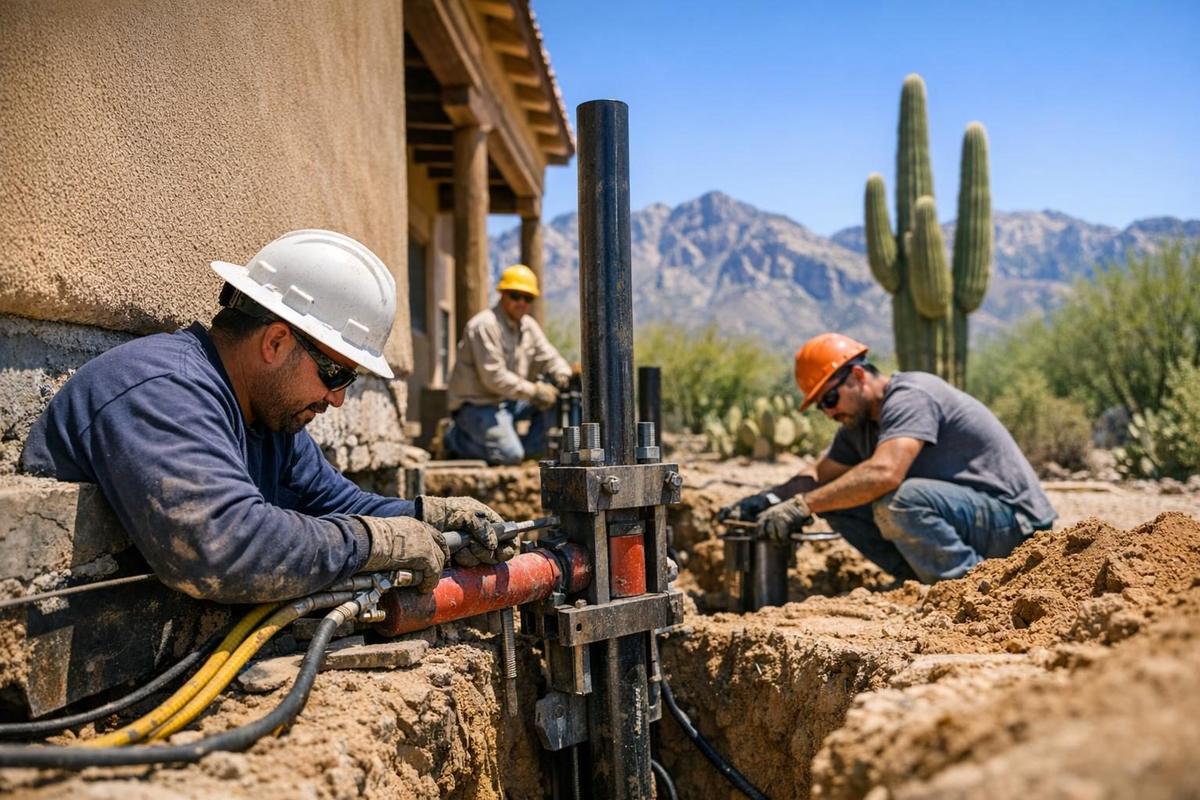
Foundation repair is the process of restoring a home’s structural base after settling, cracking, or shifting has compromised its stability. In Tucson, expansive clay soils and extreme heat cycles cause the ground beneath homes to shrink and swell repeatedly. That movement puts constant pressure on concrete slabs and footings.
Left alone, small cracks grow into major structural failures. Doors stop closing. Floors slope. Walls separate from ceilings. Catching these signs early keeps the project shorter and less expensive to address.
Typical Foundation Repair Timelines by Method
Different techniques require different amounts of time on site. Here’s a realistic breakdown based on common Tucson projects:
| Method | Typical Duration | Best For |
|---|---|---|
| Steel push piers | 1 to 3 days | Settled or sinking foundations |
| Helical piers | 1 to 3 days | Lighter structures, new construction |
| Mudjacking (slab lifting) | 1 to 2 days | Sunken concrete slabs |
| Polyurethane foam injection | Several hours to 1 day | Minor slab settling |
| Wall anchors or carbon fiber straps | 1 to 2 days | Bowing or leaning walls |
| Full underpinning | 1 to 3 weeks | Severe structural damage |
Steel push piers and helical piers are the most common solutions for Tucson homes. A crew drives piers deep into stable bedrock below the active soil zone, then lifts the structure back to level. Most pier jobs wrap up in 1 to 3 days unless the home has 15 or more pier locations.
Mudjacking pumps a cement slurry beneath a sunken slab to raise it. The process itself finishes quickly, but curing adds a day before you can use the area. Polyurethane foam injection is even faster since the foam sets within minutes.
Full underpinning is the longest option. It involves excavating around footings and extending them to a deeper, more stable soil layer. This method is rare in residential work but necessary when deterioration has reached the footing itself.
Factors That Extend the Timeline
Several variables push a project beyond the average window:
- Severity of damage. A home with 20 cracked piers takes longer than one needing 6. More access points mean more excavation and more hardware.
- Soil conditions. Tucson’s caliche layer, a calcium carbonate hardpan found 1 to 3 feet below grade, can slow drilling significantly. Contractors sometimes need specialized bits to penetrate it.
- Permit requirements. Pima County requires permits for structural work. Plan for 1 to 5 business days of lead time before crews can start.
- Access issues. Landscaping, fences, utility lines, or tight lot setbacks can limit equipment access and add setup time.
- Multiple systems involved. If plumbing runs through the slab (common in Tucson homes built before 1990), the crew may need a plumber on site to reroute pipes before lifting.
How to Speed Up Your Project
You have more control over the timeline than you might think. Start with these steps:
- Get inspections early. Contact a structural engineer or qualified contractor at the first sign of cracking. Early assessment often means a simpler scope of work.
- Clear the perimeter. Move planters, stored items, and loose gravel away from the foundation walls before the crew arrives. This saves a full morning of prep.
- Coordinate other trades. If you also need concrete slab work or plumbing reroutes, schedule them in sequence so one crew doesn’t wait on another.
- Choose a contractor with local experience. A company that understands Tucson’s soil profile and permitting process avoids the learning curve that slows out-of-town firms.
What Happens After the Work Is Done?
Once the structural correction is complete, most contractors backfill excavated areas and compact the soil on the same day. Cosmetic fixes like patching drywall cracks or releveling interior floors happen afterward and aren’t part of the structural timeline.
Pier-based solutions typically come with transferable warranties ranging from 10 years to the lifetime of the structure. Ask for documentation before the crew leaves. Understanding how long the results will hold up is just as important as knowing the project duration.
Choosing the Right Method for Your Tucson Home
The best approach depends on what’s actually happening beneath the slab. A qualified inspector will check for differential settling using a manometer or laser level, then recommend a specific repair method based on the measurements. Don’t commit to a technique before getting at least two professional opinions.
Polyurethane foam works well for minor settling under garage slabs or patios. Piers are the standard for load-bearing walls that have dropped. Wall anchors solve lateral pressure problems caused by expansive soil pushing inward. Each approach has a different cost, timeline, and long-term performance profile, so matching the method to the problem keeps the schedule tight and the results lasting.
Frequently Asked Questions About Foundation Repair Timelines
Can I stay in my home during the work?
Yes, in almost every case. Pier installation and mudjacking happen outside the home along the perimeter or beneath the slab. Noise levels are comparable to a construction site, but the interior stays livable throughout the process.
Does Tucson weather affect the schedule?
Rarely. Tucson averages over 280 sunny days per year, so rain delays are uncommon. Monsoon season (June through September) can cause occasional pauses, but most contractors build a buffer into their summer schedules.
How soon can I tell if the fix worked?
Doors and windows that were sticking usually operate normally the same day the structure is lifted. Drywall cracks may reappear slightly as the home settles into its corrected position, which is normal during the first 30 to 60 days.
Is a permit always required?
Pima County requires a building permit for structural work on residential properties. Your contractor should handle the application, but confirm this before signing a contract. Skipping permits can void warranties and create problems when you sell.
What’s the fastest possible turnaround?
Polyurethane foam injection for a small slab section can finish in under 4 hours. For full pier underpinning on a typical 1,500 square foot Tucson home, expect 2 to 3 working days from mobilization to cleanup.
Start by scheduling an inspection with a licensed Tucson contractor who specializes in structural corrections. Get at least two quotes, compare the proposed methods, and verify each company carries both liability insurance and a structural warranty. The sooner you address how long foundation repair will take for your specific situation, the simpler and shorter the project will be.