
What Is Stained Concrete Flooring?
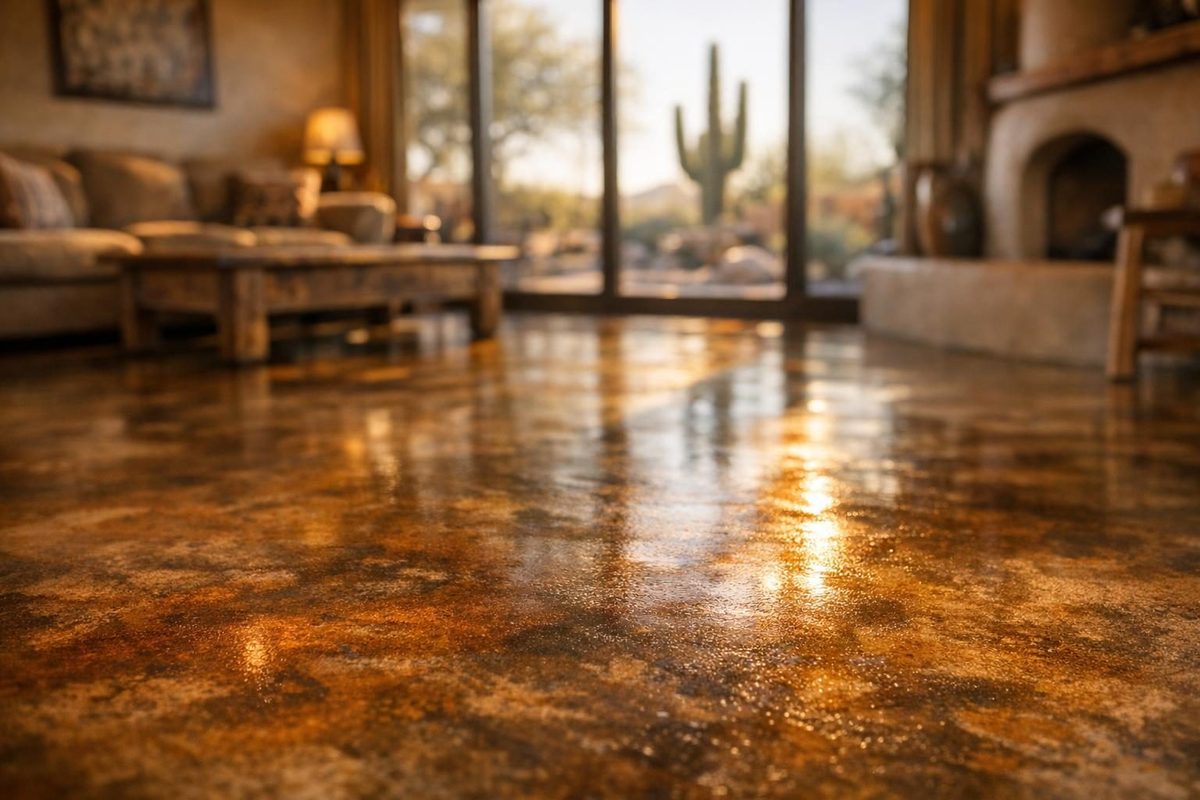
Stained concrete flooring is a decorative finish created by applying acid-based or water-based colorants directly onto a cured concrete slab. The result is a permanent, richly colored surface that works in living rooms, kitchens, patios, and commercial spaces. For Tucson homeowners weighing whether stained concrete flooring is a good option, the short answer is yes, and the reasons go beyond just looks.
Unlike paint or vinyl overlay, a concrete stain penetrates into the slab itself. That means the color won’t peel, chip, or flake the way a surface coating might. Two main types exist: acid-based stains that react chemically with minerals in the slab to produce earthy, mottled tones, and water-based stains that sit in the pores and offer a wider palette of vibrant hues. Both deliver results that hold up for years with minimal upkeep.
Why Stained Concrete Works Especially Well in Tucson
Tucson’s desert climate creates conditions where stained concrete performs better than most alternatives. The Sonoran Desert brings intense UV exposure, temperature swings of 30+ degrees in a single day, and extremely low humidity. Those three factors punish hardwood, laminate, and carpet while barely affecting a properly sealed concrete slab.
Concrete has high thermal mass. It absorbs heat during the day and releases it slowly at night, which helps stabilize indoor temperatures without overworking your HVAC system. In a city where summer highs regularly top 100 degrees Fahrenheit, that passive cooling effect translates to real savings on electricity bills. Tile offers similar thermal benefits, but tile grout lines collect dust, crack over time, and cost more per square foot to install.
Dust and allergens are another Tucson reality. Desert winds carry fine particulate matter year-round. Carpet traps that dust deep in its fibers. Stained concrete has zero fibers, zero grout lines, and zero places for allergens to hide. A damp mop once a week keeps the surface clean. For households with asthma or allergy sensitivities, that difference matters more than aesthetics.
Benefits of Choosing Stained Concrete Floors
Stained concrete floors deliver a combination of durability, cost savings, and design flexibility that few other materials match. Here’s what makes them stand out.
Durability That Outlasts Competing Materials
A concrete slab is the foundation of most Tucson homes already. Staining it doesn’t weaken the structure. It actually adds a protective layer once sealed. Properly maintained stained floors last 15 to 20 years before needing a fresh sealer coat. Hardwood scratches, laminate warps in humidity, and carpet wears thin in high-traffic areas within 5 to 8 years. Concrete just keeps going.
One thing most guides skip: the density of the original pour matters. A slab with a PSI rating above 3,500 takes stain more evenly and resists surface wear better than a lower-grade mix. If you’re building new, specify at least 4,000 PSI for interior floors you plan to stain.
Low Maintenance Requirements
Maintaining stained concrete takes less effort than any carpet, tile, or wood alternative. Sweep or vacuum weekly. Damp mop with a pH-neutral cleaner monthly. Reapply a thin coat of floor wax every 6 to 12 months if you want extra shine. That’s it. No steam cleaning, no refinishing, no grout scrubbing.
Spills wipe up immediately on a sealed surface. Coffee, wine, pet accidents: none of them penetrate a properly sealed slab. Compare that to the panic of red wine on white carpet, and the maintenance case makes itself. For more tips on keeping your floors in top shape, see our concrete flooring maintenance guide.
Cost Compared to Other Materials
Staining an existing concrete slab typically costs between $2 and $6 per square foot for materials and labor in the Tucson area. Compare that to these alternatives:
| Material | Cost per Sq Ft (Installed) | Lifespan |
|---|---|---|
| Stained concrete | $2 to $6 | 15 to 20 years |
| Hardwood | $8 to $15 | 10 to 15 years |
| Porcelain tile | $6 to $12 | 15 to 25 years |
| Luxury vinyl plank | $4 to $8 | 8 to 12 years |
| Carpet | $3 to $7 | 5 to 8 years |
Stained concrete wins on cost-per-year-of-use in nearly every comparison. The slab already exists under most Tucson homes, so you’re not paying for a new subfloor or underlayment.
Design Flexibility and Color Choices
Acid stains produce 8 to 12 earthy tones, from amber and tan to deep walnut and charcoal. Each application reacts differently with the minerals in the slab, so no two floors look identical. That natural variation gives every room character.
Water-based stains expand the palette to virtually any color. Blues, greens, terracotta reds, even custom blends are possible. You can layer stains, use stencils, score geometric patterns into the slab, or combine techniques for a completely unique result. If you want something beyond a single flat color, explore stamping and staining techniques for decorative concrete to see what’s achievable.
Curious about concrete coating colors? Coatings offer another route if you prefer a solid, opaque finish over a translucent stain effect.
Indoor Air Quality Benefits
VOCs, or volatile organic compounds, are chemicals that off-gas from many building materials. Carpet adhesives, laminate backing, and vinyl planks all release VOCs into indoor air. A stained and sealed slab produces near-zero off-gassing after the initial 48-hour cure period of the sealer.
For Tucson homes that stay closed up during summer months to keep the AC running, lower VOC exposure makes a measurable difference in indoor air quality. Choosing a low-VOC or no-VOC sealer pushes emissions even lower. Some homeowners pair their stained floors with an ERV (energy recovery ventilator) to bring filtered fresh air inside without losing cooled air. That combination, sealed floors plus controlled ventilation, creates some of the cleanest indoor air you’ll find in a desert home.
Resale Value and Buyer Appeal
Tucson’s real estate market has seen growing demand for move-in-ready homes with low-maintenance finishes. Buyers looking in the $250K to $500K range frequently cite flooring condition as a deciding factor. A well-executed stained floor signals that the home has been thoughtfully maintained. It also removes one of the first renovation projects a new buyer would tackle, which makes the listing more competitive.
Real estate agents in the Tucson metro area report that homes with polished or stained floors photograph better for online listings. The reflective surface picks up natural light and makes rooms appear larger. In a market where 95% of buyers start their search online, that visual first impression carries weight.
How to Choose the Right Stain for Your Concrete Slab
Picking the right stain type depends on the look you want, the condition of your existing slab, and your budget. Here’s a breakdown of the three main categories.
Acid-Based Chemical Stains
An acid stain is a solution of metallic salts dissolved in an acid-and-water carrier. When applied to concrete, it reacts with calcium hydroxide in the slab to produce permanent, translucent color. The chemical reaction creates unique marbling and tonal variation that can’t be replicated with any other method.
Acid stains work best on slabs that haven’t been previously sealed or coated. The reaction needs direct contact with the minerals in the concrete. If your slab has an existing sealer, it must be stripped first. Typical acid stain colors range from light golden tan to deep reddish brown, with most falling in the earth-tone family.
Water-Based Acrylic Stains
Water-based stains use acrylic polymers to carry pigment into the pores of the slab. They don’t rely on a chemical reaction, which means they produce more consistent, predictable color. The tradeoff is that they penetrate only about 1/8 inch into the surface, compared to the deeper penetration of acid stains.
The upside is color range. You can get nearly any hue with a water-based product. They’re also easier to apply, produce less odor during installation, and clean up with water. For DIY-inclined homeowners, water-based stains are more forgiving than acid formulas.
Topical Stains and Sealers with Color
Topical products sit on the surface rather than penetrating into the slab. Think of them as tinted sealers. They offer the widest color selection and the simplest application process, but they wear down faster in high-traffic zones and may need reapplication every 2 to 3 years.
Topical stains work well for decorative accents, borders, or areas with lighter foot traffic. For a main living area or commercial entry, acid or water-based stains deliver better long-term results.
Factors to Consider Before Staining Your Floors
Before committing, evaluate these four practical considerations. Each one affects the final result and your long-term satisfaction.
Slab Condition and Age
New concrete needs at least 28 days of cure time before staining. Older slabs may have existing sealers, coatings, or adhesive residue from removed carpet or tile. All of those need to be addressed before stain application. A professional will typically grind or diamond-polish the surface to create a clean, porous profile that accepts stain evenly.
Cracks in the slab will show through any stain. Small hairline cracks can add character to a mottled acid stain look. Larger structural cracks should be repaired first. If you’re concerned about cracking, our article on why concrete flooring cracks explains the common causes and fixes.
Room Usage and Foot Traffic
High-traffic areas like entryways, kitchens, and hallways need a more durable sealer over the stain. Polyurethane or polyaspartic sealers hold up better than basic acrylic sealers in these zones. A garage or commercial storefront might call for an epoxy coating system instead of a stain, especially if the floor will see rolling loads or chemical exposure.
Climate and Moisture Considerations
Tucson’s dry air is actually ideal for stained concrete. Excess moisture is the enemy of stain adhesion and sealer performance. In more humid climates, moisture vapor transmission from beneath the slab can cause clouding or delamination. The arid Southwest rarely presents this problem, which is one more reason stained concrete flooring is a particularly good option here.
Matching Your Home’s Style
Stained concrete adapts to almost any interior design approach. Southwestern and desert modern homes pair naturally with warm acid-stain tones. Contemporary spaces look sharp with cool gray or charcoal water-based stains. Scored grid patterns can mimic large-format tile at a fraction of the cost.
If you’re exploring a broader range of decorative treatments, check out our roundup of decorative concrete ideas for inspiration beyond staining alone.
Installation Process: What to Expect
Knowing what happens during installation helps you plan around the disruption and set realistic expectations for the timeline.
- Surface preparation. The installer grinds, strips, or acid-etches the slab to remove any existing coatings and open the pores. This step takes 1 to 2 days depending on floor size and condition.
- Stain application. The chosen stain is sprayed or rolled onto the prepared slab. Acid stains need 4 to 24 hours of dwell time for the chemical reaction to complete. Water-based stains dry faster, usually within 2 to 4 hours.
- Neutralization and cleaning (acid stains only). After the reaction period, the installer neutralizes the acid with a baking soda solution, then scrubs and rinses the surface.
- Sealer application. Once the floor is fully dry, 1 to 2 coats of sealer go down. Each coat needs 4 to 8 hours of cure time. The sealer protects the stain and gives the floor its final sheen, from matte to high gloss.
- Cure and walkability. Light foot traffic is typically safe after 24 hours. Full cure takes 3 to 7 days. Avoid placing furniture or rugs on the surface during this period.
Total project timeline for a typical 1,000-square-foot home: 3 to 5 days from prep to walkable surface.
DIY vs. Professional Installation
Water-based stains are the most DIY-friendly choice. The application process is straightforward: clean the slab, apply with a pump sprayer or roller, let it dry, then seal. Acid stains require more caution because the acid solution can burn skin and produce fumes that need ventilation. Protective gear, including goggles, rubber gloves, and a respirator, is mandatory.
The biggest risk with DIY installation isn’t the staining itself. It’s the surface prep. Inadequate grinding or incomplete removal of old sealers leads to blotchy, uneven color absorption. Professional installers use diamond grinders with dust extraction systems that produce a consistently profiled surface. For a primary living area where the results will be visible every day, hiring a pro typically costs $1 to $3 more per square foot than DIY but eliminates the most common failure points.
Long-Term Care Tips From Installers
After working on hundreds of stained slabs, most Tucson installers share the same advice. Place felt pads under all furniture legs. Use walk-off mats at exterior doorways to catch gravel and sand that can scratch sealed surfaces over time. Avoid ammonia-based cleaners, which can cloud certain sealers. If a section of sealer starts looking dull or worn, you can spot-recoat that area without redoing the entire floor.
Frequently Asked Questions About Stained Concrete Flooring
Is stained concrete flooring a good option for homes with pets?
Stained concrete with a quality sealer resists pet stains, scratches, and odors far better than carpet or hardwood. Accidents wipe clean without soaking in, and claws don’t scratch a sealed surface the way they gouge wood. Reapply sealer annually in homes with large or active dogs to maintain full protection.
How long does stained concrete flooring last?
A properly stained and sealed slab lasts 15 to 20 years before needing significant maintenance. The stain itself is permanent because it chemically bonds with or penetrates into the slab. The sealer is what needs periodic refreshing, typically every 3 to 5 years depending on traffic levels.
Can you stain concrete that already has a coating on it?
Existing coatings, sealers, or paint must be fully removed before applying a stain. The stain needs direct contact with the concrete pores to penetrate and bond. Grinding or chemical stripping accomplishes this. Skipping the prep step is the most common reason DIY stain projects fail.
Does stained concrete get slippery when wet?
A sealed surface can be slick when wet, especially with a high-gloss sealer. Adding a non-slip additive to the final sealer coat solves this problem. Most professional installers in Tucson recommend a satin or matte finish for kitchens, bathrooms, and covered patios for exactly this reason.
What is the difference between staining and coating concrete?
Staining penetrates into the slab and produces a translucent, variegated appearance. A coating, such as epoxy or polyaspartic, sits on top of the surface and creates an opaque, uniform finish. Stains are better for natural, organic looks. Coatings are better for garages, industrial spaces, and areas needing chemical resistance. Learn more about types of concrete coatings to compare your choices.
If stained concrete flooring sounds like a good option for your Tucson home, the first step is getting your slab evaluated by a local installer. They’ll check the condition of your existing concrete, recommend the right stain type for your space, and give you a square-footage quote. Call our team for a free assessment, and you can have transformed floors within a week.