
How long concrete coatings last depends on the product type, surface preparation, and daily wear. A well-applied epoxy floor coating on a properly prepped garage slab can hold up for 10 to 20 years. A cheap acrylic sealer on a driveway with heavy truck traffic might fail in 2 to 3 years. The gap between those outcomes comes down to choices you make before the first roller touches the slab.
- Typical Lifespan by Coating Type
- 5 Factors That Determine How Long Concrete Coatings Last
- How to Make Your Floor Coating Stronger and Longer-Lasting
- Maintenance Practices That Extend Coating Life
- Signs Your Coating Has Failed and Needs Replacement
- What Professional Installation Adds
- Closing Thoughts on How Long Concrete Coatings Last
- Frequently Asked Questions About Concrete Coating Lifespan
Typical Lifespan by Coating Type
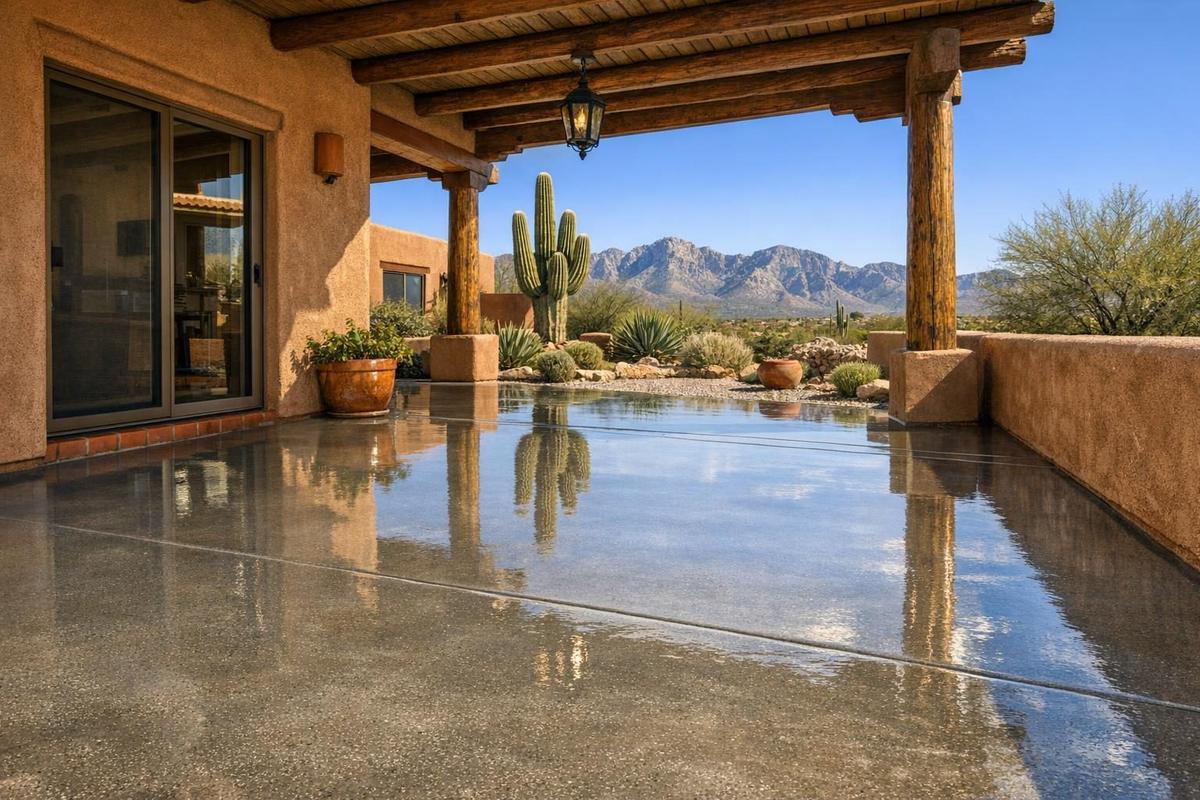
Each coating chemistry performs differently under stress. Here is a realistic breakdown of how long you can expect the major types of concrete coatings to hold up in Tucson’s hot, dry climate.
| Coating Type | Expected Lifespan | Best Use |
|---|---|---|
| Epoxy | 10 to 20 years | Garage floors, commercial spaces |
| Polyurethane | 5 to 10 years | High-traffic industrial floors |
| Polyaspartic | 10 to 15 years | Fast-cure residential and commercial |
| Acrylic sealer | 1 to 3 years | Decorative patios, low-wear surfaces |
| Polyurea | 15 to 20+ years | Extreme duty, chemical exposure areas |
Polyurea is a spray-applied elastomeric material that bonds at the molecular level with the substrate. It cures in seconds, not hours. In Tucson, where UV exposure is intense year-round, polyurea and polyaspartic systems outperform standard epoxy outdoors because they resist yellowing and chalking far better under direct sun.
5 Factors That Determine How Long Concrete Coatings Last
Product chemistry sets the ceiling. Everything else determines whether you actually reach it.
- Surface preparation. Grinding or shot-blasting the slab creates a profile (measured in CSP, or Concrete Surface Profile) that lets the resin grip mechanically. Skip this step and the coating peels within months. The ICRI, the International Concrete Repair Institute, publishes the CSP standards that professionals follow.
- Moisture levels. Tucson’s desert climate helps here, but fresh pours still hold moisture. A calcium chloride test or relative humidity probe test should read below the manufacturer’s threshold before application. Trapped moisture causes blistering and delamination.
- Coating thickness. Thin films wear through faster. Most epoxies perform best at 10 to 20 mils dry film thickness. Going too thin saves material cost but cuts lifespan in half.
- Traffic and load type. A residential garage with two passenger cars puts far less stress on a floor than a warehouse running forklifts 12 hours a day. Match the product to the actual use.
- UV exposure. Outdoor installations in southern Arizona take a beating. Non-UV-stable formulations yellow and chalk within a year. Polyaspartic or aliphatic polyurethane topcoats handle UV without degradation.
How to Make Your Floor Coating Stronger and Longer-Lasting
You don’t need to spend more money to get a tougher result. You need to spend more time on preparation and pick the right system for your situation.
Prepare the Surface Before Anything Else
Clean the slab with a degreaser. Repair cracks, spalls, and pitting with a patching compound rated for the resin you plan to use. Then grind or shot-blast to the correct CSP level. This single step accounts for roughly 80% of coating failures or successes. One mistake I see repeatedly on Tucson garage floors: homeowners acid-etch instead of grinding. Acid etching rarely produces enough profile for epoxy to bond properly, especially on power-troweled slabs.
Choose the Right System for the Environment
Epoxy works well indoors. For outdoor patios and driveways, use a UV-stable polyaspartic or polyurea. For slip resistance in wet areas, broadcast aluminum oxide or polymer grit into the topcoat while it’s still tacky. This creates a textured surface that stays grippy even when wet.
Apply Multiple Coats
A single coat provides basic protection. Two coats with a primer build real durability. Some commercial installations use three layers: a moisture-mitigating primer, a body coat, and a UV-stable topcoat. Each layer adds thickness and chemical resistance.
Follow the Manufacturer’s Cure Schedule
Epoxy needs 24 to 72 hours before foot traffic and 5 to 7 days before vehicles. Polyaspartic cures in 4 to 6 hours. Rushing the cure by driving on it early creates soft spots that wear through quickly. Temperature matters too. Most products require application between 50 and 90 degrees Fahrenheit. In Tucson summers, early morning application avoids problems with flash curing from extreme heat.
Maintenance Practices That Extend Coating Life
Regular concrete flooring maintenance is the cheapest way to add years to any coating system. Dirt and sand act as abrasives under foot and tire traffic. Left on the surface, they grind through the topcoat over time.
- Sweep or dust-mop weekly to remove abrasive particles.
- Mop with a pH-neutral cleaner monthly. Avoid bleach and acidic cleaners, which break down resin bonds.
- Clean up oil, gasoline, and chemical spills immediately. Most coated surfaces resist stains, but prolonged exposure softens the resin.
- Place mats at entry points to catch grit from shoes and tires.
- Inspect annually for chips, cracks, or worn spots. Touch up small areas before damage spreads beneath the film.
With consistent care, a quality garage floor system that might normally show wear at year 8 can look nearly new at year 12.
Signs Your Coating Has Failed and Needs Replacement
No system lasts forever. Knowing when a floor needs recoating saves you from bigger repairs later. Watch for these warning signs:
- Hot tire pickup. If your car tires pull up tacky spots after sitting in a hot garage, the resin has softened. This is the most common failure mode for low-quality epoxy kits.
- Bubbling or blistering. Moisture rising through the slab pushes the film up. This usually means the surface was not tested for moisture before application.
- Peeling at edges or joints. Delamination starts at control joints, cracks, and garage door thresholds where the profile was hardest to prep properly.
- Color fading or chalking. UV breakdown. Common with non-UV-stable formulations used outdoors or near open garage doors.
- Visible wear paths. High-traffic areas thin out first. If you can see bare slab through the film, it’s time for a recoat.
Catching these early means you can scuff-sand and apply a fresh topcoat instead of stripping the entire system and starting over. That saves 60% to 70% of the cost of a full redo.
What Professional Installation Adds
A concrete coating professional brings diamond grinding equipment, moisture testing tools, and experience matching products to conditions. DIY epoxy kits from home improvement stores typically use thinner formulations with weaker resins. They can work for light-duty situations, but the lifespan gap between a $150 DIY kit and a $1,500 professional installation is substantial.
Professional-grade polyaspartic and polyurea systems are not available at retail. These products require calibrated spray equipment and trained applicators. The trade-off: higher upfront cost for a floor that holds up 3 to 5 times longer than a weekend DIY project.
For decorative applications like metallic epoxy or flake broadcast floors, professional installation is especially important. These finishes require precise timing and technique that directly affects both appearance and longevity.
Closing Thoughts on How Long Concrete Coatings Last
Start by choosing a product rated for your specific use case, whether that’s a residential garage, a commercial warehouse, or an outdoor patio. Then invest the time in proper surface prep, because no product can compensate for a dirty or poorly profiled slab. If you’re in Tucson and want a floor that performs for 10 to 20 years, get a professional assessment of your slab’s condition before committing to a coating system.
Frequently Asked Questions About Concrete Coating Lifespan
How often do you need to recoat a garage floor?
Most professionally installed epoxy or polyaspartic garage floors go 10 to 15 years before needing a recoat. DIY kits may need attention every 3 to 5 years depending on traffic levels and surface prep quality.
Can you apply new coating over old coating?
Yes, as long as the existing film is still bonded to the slab. Scuff-sand the old surface to create mechanical adhesion, clean thoroughly, and apply the new topcoat. If the old layer is peeling or blistering, you need to strip it down to bare slab first.
Does weather affect how long floor coatings hold up in Tucson?
Tucson’s intense UV and heat accelerate breakdown of non-UV-stable products. Indoor installations are largely unaffected by weather. Outdoor surfaces need polyaspartic or aliphatic polyurethane topcoats that resist UV degradation.
Is polyaspartic better than epoxy for longevity?
Polyaspartic coatings offer similar or better durability compared to standard epoxy, plus UV stability and faster cure times. For outdoor or UV-exposed areas, polyaspartic is the better choice. For purely indoor use, both perform well when properly installed.
What voids a concrete coating warranty?
Common warranty exclusions include improper surface preparation, application outside the recommended temperature range, chemical exposure beyond rated limits, and failure to follow the manufacturer’s maintenance guidelines. Always read the full warranty terms before installation.