
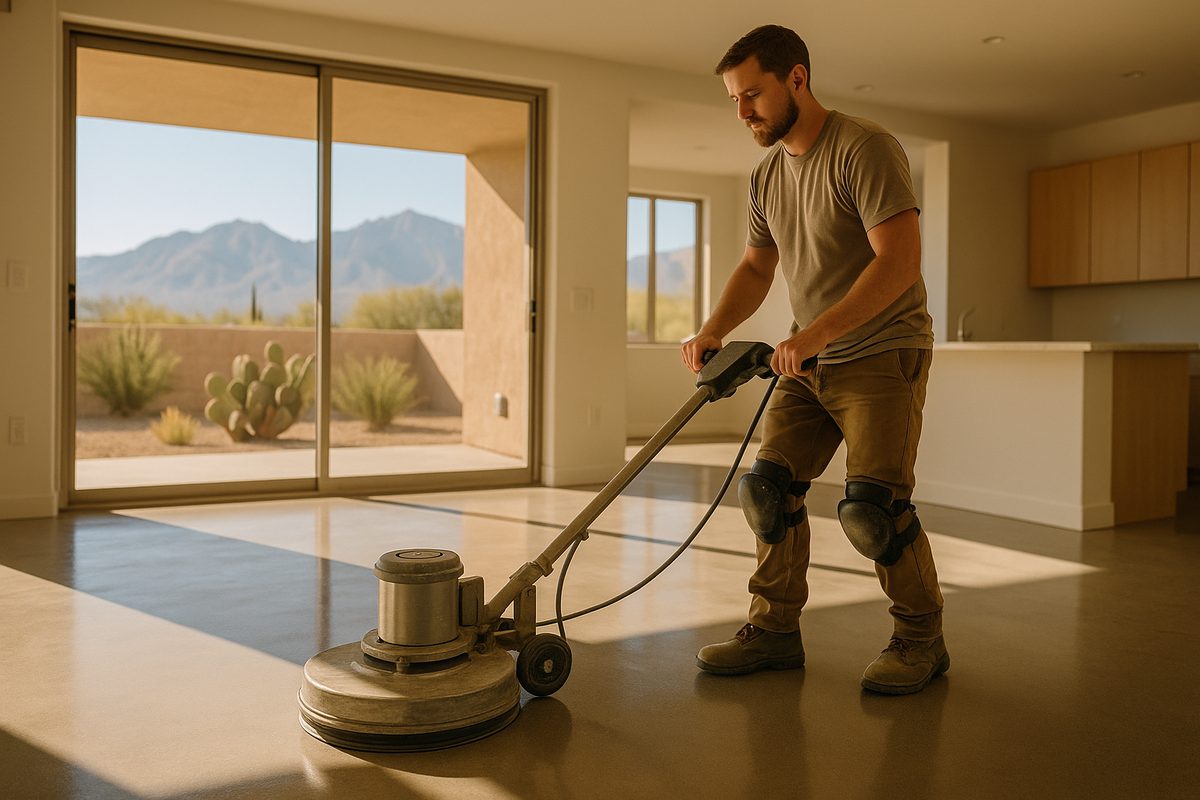
Concrete flooring maintenance in Tucson requires a plan built around the desert climate, your finish type, and how much foot traffic the surface handles daily. Polished slabs, stained finishes, and coated garage pads each respond differently to heat, UV exposure, and the fine grit that blows in from the Sonoran Desert. A consistent routine of cleaning, sealing, and minor repair keeps your floors looking sharp and prevents the kind of damage that leads to expensive restoration work. This guide breaks down exactly what to do, when to do it, and which mistakes to avoid.

Daily and Weekly Cleaning Routines That Protect Your Floors
Regular cleaning is the single cheapest way to extend the life of any finished slab. Desert air carries fine silica particles that act like sandpaper under shoes and rolling chairs. A quick dust mop or vacuum pass every day removes that grit before it grinds into the surface.
For weekly cleaning, mix a pH neutral cleaner with warm water and go over the surface with a microfiber mop. pH neutral cleaners are formulated to lift dirt without stripping protective coatings or etching the slab underneath. Skip anything acidic, ammonia-based, or abrasive. Vinegar and citrus products sound natural, but they dissolve sealers and leave a hazy residue that builds up over time.
Spill response matters more than most property owners realize. Oil, grease, or colored liquids left sitting on a porous or unsealed area can penetrate within hours. Even standing water left overnight can leave mineral deposits. The owners who wipe spills immediately almost never need professional stain removal later. It’s always the neglected spots that turn into real problems.
How to Seal and Protect Your Floors From Tucson’s Climate
A sealer creates a barrier that blocks moisture absorption, resists staining, and slows wear from foot traffic. Unsealed slabs absorb water, oil, and dirt directly into the pore structure, which makes cleaning harder and shortens the surface life significantly.
Three common sealer types work well for residential and commercial applications in Tucson:
- Acrylic sealers provide a thin protective film and are the most affordable option. They work best on decorative or stained floors where you want to enhance color without a thick buildup.
- Epoxy coatings bond directly to the slab and create a hard, chemical-resistant surface. These are the go-to choice for garage pads and workshop areas that see heavy use. Learn more about the different coating options available.
- Polyurethane sealers offer strong UV resistance and flexibility, which makes them a solid pick for outdoor patios and pool decks exposed to direct Tucson sunlight.
For polished surfaces, a lithium silicate densifier is applied during the polishing process. A densifier is a chemical hardener that penetrates the slab and increases its abrasion resistance before any topical sealer goes on.
Tucson’s UV intensity and daily temperature swings of 30+ degrees break down coatings faster than in milder climates. Plan to reapply sealer every 2 to 4 years depending on traffic and sun exposure. A simple water drop test tells you when it’s time: if water soaks in instead of beading on the surface, the protective layer has worn through. You can read more about how long coatings typically last in our area.
One mistake I see repeatedly is applying a fresh coat of sealer over residue from the old one. That traps contaminants and causes peeling within months. Always strip or thoroughly clean the existing layer before recoating.
Repairing Cracks, Chips, and Surface Damage
Even well-maintained slabs develop minor issues over time. Hairline cracks from settling, small chips along edges, and scratches from furniture legs are all normal wear. The key is catching them early before moisture gets underneath and causes larger failures.
Here’s a practical repair approach based on damage severity:
- Surface scratches: A diamond polishing pad at 400 grit or higher can buff out light marks and restore the shine without resealing.
- Small chips and spalls: Fill with a polymer-modified patching compound, let it cure for 24 hours, then sand flush with the surrounding surface.
- Hairline cracks (under 1/8 inch): Inject a flexible polyurea or epoxy crack filler. Rigid fillers crack again during thermal expansion cycles.
- Structural cracks (over 1/4 inch or widening): Have a qualified team evaluate whether the issue is cosmetic or tied to foundation movement before filling.
Timing matters as much as the method. Tucson’s temperature swings cause slabs to expand and contract seasonally, so the best window for crack repair is during moderate weather in spring or fall. Filling a crack during peak summer heat (when the slab is fully expanded) means the repair will be under tension once temperatures drop. Understanding why floors crack in the first place helps you choose the right fix. You can also review common causes of deterioration to catch problems before they spread.
Professional Care Schedules for Residential and Commercial Spaces
Different environments need different levels of professional attention. A high-traffic retail store or warehouse benefits from quarterly machine scrubbing and an annual polish or recoat. A home garage or covered patio might only need a professional visit every 2 to 3 years.
The American Concrete Institute (ACI), the leading technical authority on design and care standards, recommends routine inspections as part of any long-term upkeep plan. Annual walkthroughs catch early signs of wear, delamination, or moisture issues that aren’t visible during daily use.
Practical tips that reduce how often you need professional work:
- Place walk-off mats at every entry point to trap grit before it reaches the finished surface.
- Use felt pads under furniture legs and equipment. Hard plastic casters on unprotected slabs cause scratches within weeks.
- Keep a cleaner rated for your specific finish type on hand. Using the wrong product voids some coating warranties.
- Schedule a full inspection once a year, ideally before summer when heat stress is highest.
Staying ahead of the wear curve costs a fraction of what reactive restoration runs. Downtime is minimal when you maintain on schedule rather than waiting until the surface visibly declines.
Your Tucson Concrete Flooring Maintenance Team
Concrete Tucson provides floor polishing, sealing, and repair services for property owners across the region. Whether the project involves restoring a worn commercial area or protecting a newly installed residential slab, our team handles every step with the same attention to detail. Start by scheduling a free inspection so we can assess your current condition and recommend the right protection plan for your situation. Find a reliable concrete flooring contractor who understands the demands of desert climate concrete flooring maintenance.
Frequently Asked Questions
Do concrete floors require maintenance?
Yes, every finish type needs routine care. Polished, sealed, stained, and coated surfaces all require regular cleaning and periodic resealing to maintain their appearance and durability. Without upkeep, they become dull, pick up stains more easily, and cost more to restore later.
How often do concrete floors need to be sealed?
Most residential and commercial floors need resealing every 2 to 4 years. High-traffic areas or surfaces exposed to direct sunlight in Tucson may need attention sooner. Run a water drop test annually: if water absorbs rather than beading, the sealer has worn through.
What should you not use on concrete floors?
Avoid vinegar, citrus-based products, ammonia cleaners, and anything labeled “heavy duty degreaser” unless your finish specifically allows it. These products strip sealers, etch surfaces, and leave residue. Stick with a pH neutral cleaner and non-abrasive pads.
Can you polish old concrete floors?
Yes, most existing slabs can be ground and polished to a high-gloss finish regardless of age. The slab needs to be structurally sound and free of major spalling or deep cracks. A contractor will test the surface hardness first to determine the right diamond grit progression.
How do you remove stains from concrete flooring?
The method depends on the stain type. Oil and grease respond to a poultice made from baking soda and water left overnight. Rust stains need an oxalic acid treatment. Paint can be scraped or stripped with a solvent appropriate for the finish type. For sealed surfaces, most stains wipe up easily if caught within a few hours.