
Stamping and staining techniques for decorative concrete turn ordinary gray slabs into surfaces that mimic natural stone, tile, brick, or hardwood. Tucson homeowners and business owners use these methods on driveways, patios, pool decks, and walkways to boost curb appeal without the cost of premium materials. The dry desert climate here actually works in your favor because low humidity lets fresh pours cure evenly, and UV-resistant sealers hold color longer than they would in wetter regions.
How Stamping Techniques Work on Decorative Concrete
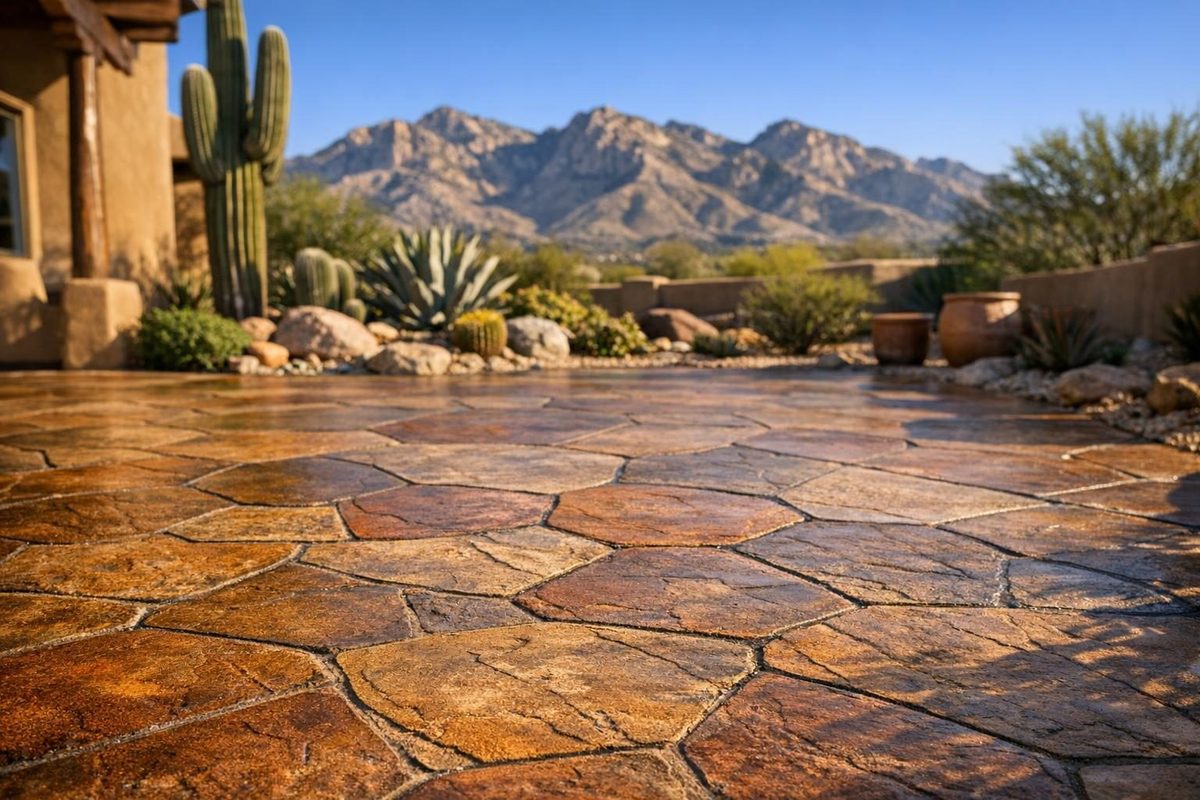
Stamped concrete starts with a freshly poured slab. A crew applies a color hardener, which is a powder broadcast across the wet surface to add pigment and strengthen the top layer. Next comes a release agent that prevents rubber stamp mats from sticking. Workers then press large polyurethane or rubber mats into the surface to imprint patterns before the slab sets.
Common stamp patterns in Tucson include:
- Ashlar slate, a rectangular stone layout popular for patios and entryways
- Cobblestone, a classic European look suited for driveways
- Wood plank, which replicates the grain and spacing of real timber
- Herringbone brick, often chosen for walkways and areas that need easy maintenance
- Random stone or flagstone, a natural look that hides minor imperfections
Timing matters more than most people realize. The crew has a narrow window, roughly 2 to 4 hours depending on temperature, where the surface is firm enough to hold a pattern but soft enough to accept it. In Tucson’s summer heat, that window shrinks. Experienced contractors often pour at dawn to get more working time.
After the stamps are removed, the crew washes off excess release agent and applies a clear acrylic sealer. This sealer locks in color, adds a slight sheen, and protects against Tucson’s intense UV exposure. Resealing every 2 to 3 years keeps stamped surfaces looking fresh.
Staining Techniques That Transform Existing Concrete
Staining is a method that adds color to concrete that has already cured. Unlike stamping, which requires a fresh pour, staining works on both new and old slabs. There are two main categories: acid-based stains and water-based stains.
Acid stains, sometimes called reactive stains, contain metallic salts that react chemically with the calcium hydroxide in cured concrete. This reaction produces translucent, mottled earth tones like amber, brown, turquoise, and terra cotta. No two acid-stained floors look identical because the reaction depends on the mineral content of each slab.
Water-based stains use acrylic polymers to deposit pigment into the concrete pores. They offer a broader color palette, including blues, greens, and bright reds that acid stains cannot produce. Water-based products are also easier to apply and produce fewer fumes, which makes them a practical choice for indoor projects like stained concrete flooring.
Surface preparation determines the final result. A contractor will typically grind or etch the slab to open the pores, then clean it thoroughly. Any curing compound, paint, or sealer left on the surface blocks stain penetration and causes blotchy spots. After the stain dries, a protective sealer goes on top.
Combining Stamping and Staining for Custom Results
Using both methods on the same project creates effects neither can achieve alone. A stamped patio with a stained border, for example, draws the eye outward and defines zones within a larger space. Some contractors stamp the main field in a slate pattern and then stain the grout lines a contrasting color to mimic real stone joints.
Another approach applies a tinted overlay to an existing stamped slab that has faded. The overlay, typically 1/4 to 3/8 inch thick, accepts new stamp impressions and stain in one process. This is often more cost-effective than tearing out and replacing the original pour.
One mistake I see repeatedly on Tucson projects is rushing the stain application on freshly stamped surfaces. The slab needs at least 28 days to cure fully before acid stain will react consistently. Skip that wait and you get uneven color that no amount of additional stain can fix.
Choosing the Right Technique for Your Tucson Project
The decision between stamping, staining, or a combination depends on three factors: the current condition of the slab, your budget, and the look you want.
| Factor | Stamping | Staining |
|---|---|---|
| Slab condition | Requires a new pour or overlay | Works on existing cured slabs |
| Typical cost per sq ft | $12 to $20 | $4 to $10 |
| Color options | Integral colors and release tints | Full spectrum (water-based) or earth tones (acid) |
| Texture | 3D pattern with depth | Flat, color only |
| Best for | Patios, pool decks, driveways | Interior floors, garage floors, accent borders |
If you already have a sound slab with no major cracks, staining is the faster and less expensive route. If you’re pouring new or the existing surface has structural damage, stamping gives you both a fresh surface and a custom pattern. For large outdoor areas, consider exploring decorative ideas that blend both methods across different zones.
Maintenance Tips for Stamped and Stained Surfaces in Tucson
Tucson’s climate, with 286 sunny days per year and minimal rainfall, is generally kind to finished surfaces. UV exposure is the main threat. Resealing every 2 to 3 years with a UV-stable acrylic or polyurethane sealer prevents color fade and surface chalking.
- Sweep or blow off loose debris weekly. Sand and small gravel act like sandpaper under foot traffic.
- Clean spills promptly. Oil, grease, and plant matter can stain unprotected surfaces if left overnight.
- Pressure wash once or twice a year at low PSI (under 2,000) to remove accumulated dust without damaging the sealer.
- Avoid deicing salts entirely. Tucson rarely freezes, but if you use salt on a rare cold night, it can pit the surface and strip the sealer.
- Inspect for hairline cracks each spring. Filling small cracks early with a color-matched caulk prevents them from widening during summer expansion cycles.
Properly maintained stamped or stained surfaces last 20 to 25 years before needing a major refresh. That lifespan makes them one of the best returns on investment for outdoor upgrades. You can learn more about how long coatings last to compare durability across finish types.
What Sets Professional Installation Apart
The difference between a DIY stamp job and a professional one usually comes down to joint placement and timing. Contractors cut control joints into the stamped surface at the right intervals, typically every 10 to 12 feet, to direct any future cracking along planned lines rather than through the middle of a pattern. They also know how to adjust the color hardener throw rate based on temperature and wind, something that takes years of fieldwork to judge accurately.
For staining, a professional will test the product on an inconspicuous area first because each slab reacts differently. They carry neutralizing agents on site for acid work and know when to apply multiple coats versus a single heavy coat. Getting this wrong means starting over, which costs more than hiring the right crew from the beginning.
Start by requesting quotes from at least three contractors who specialize in stamping and staining techniques for decorative concrete in the Tucson area. Ask to see completed projects in person, not just photos. Check that the crew plans for proper cure times and includes resealing in their warranty terms. For broader surface options, take a look at the different types of coatings available for your property.
Frequently Asked Questions About Stamping and Staining Decorative Concrete
How long does stamped concrete last in Tucson’s climate?
Stamped concrete lasts 20 to 25 years with proper sealing and maintenance. Tucson’s dry heat is easier on sealed surfaces than humid climates, though UV exposure requires resealing every 2 to 3 years to prevent fading.
Can you stain concrete that has already been stamped?
Yes, but the slab must cure for at least 28 days first. Acid-based stains work well on stamped surfaces because the texture creates natural color variation. Water-based stains offer more color choices if you want something beyond earth tones.
Is stamped concrete slippery when wet?
Textured stamp patterns provide more grip than smooth finished slabs. For pool decks and areas that get wet regularly, contractors can add a non-slip additive to the final sealer coat. This grit is nearly invisible but significantly improves traction.
What is the cost difference between stamping and staining?
Staining typically costs $4 to $10 per square foot because it works on existing slabs. Stamping runs $12 to $20 per square foot since it requires a new pour or overlay. Combining both methods on a single project usually falls in the $15 to $22 range.
How often should sealed decorative concrete be resealed?
Reseal every 2 to 3 years for outdoor surfaces exposed to direct sunlight. Indoor stained floors may go 4 to 5 years between applications. A simple water drop test tells you when it is time: if water soaks into the surface instead of beading, the sealer has worn through.