
A concrete driveway is one of the smartest investments a Tucson homeowner can make. The benefit of concrete driveways goes beyond just curb appeal. You get a surface that handles the Sonoran Desert heat, resists cracking under UV exposure, and requires almost no upkeep for decades. Compared to asphalt or gravel, it holds up longer, costs less over its lifetime, and gives you real design options. Here are six reasons why so many homeowners in Tucson choose this material for their driveways.
Durability That Lasts 25 to 30 Years
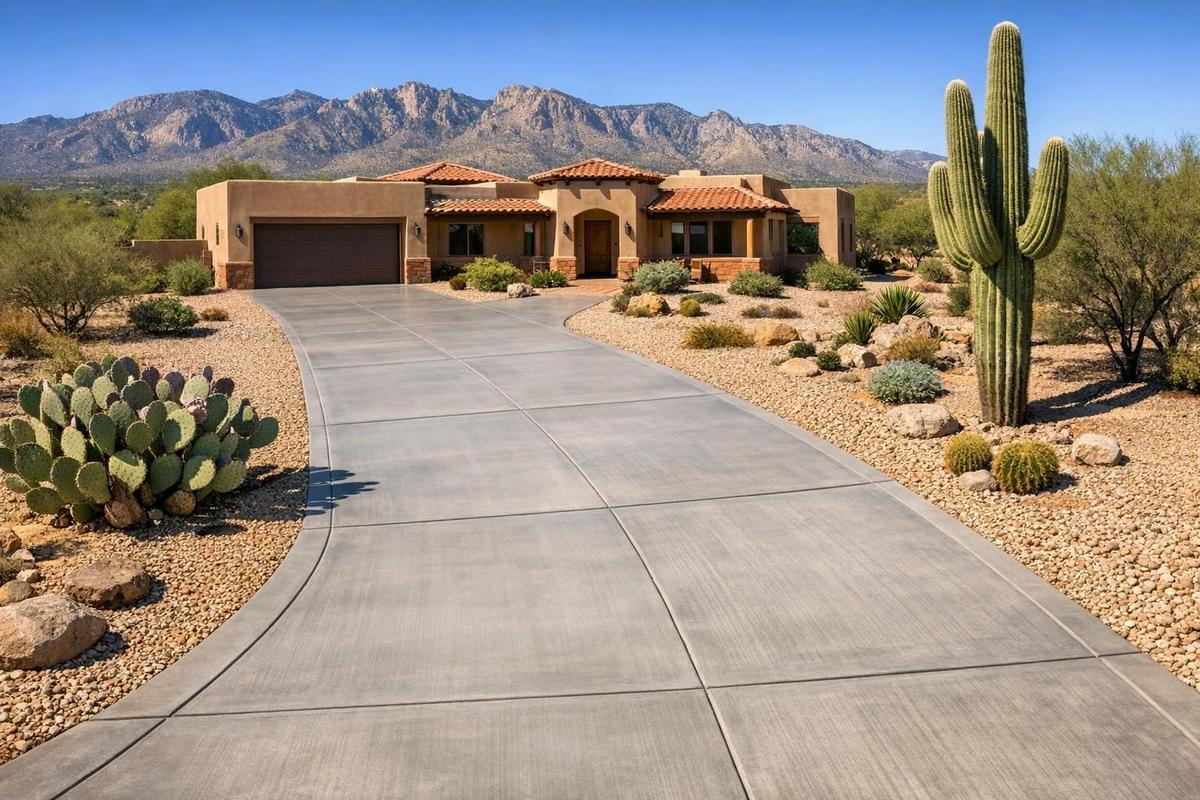
Concrete driveways typically last 25 to 30 years with proper care. That lifespan outperforms asphalt (12 to 20 years) and gravel (which needs replenishing every few years). The Portland Cement Association, the industry group representing cement manufacturers in North America, notes that the material gains strength over time rather than weakening.
In Tucson, durability matters more than in mild climates. Temperatures regularly hit 100 degrees or higher from May through September. This material handles thermal cycling better than asphalt, which softens in extreme heat. A properly poured slab with fiber mesh reinforcement and a correct thickness of at least 4 inches resists cracking even under heavy SUVs and trucks.
One thing most guides skip: the subgrade preparation matters more than the mix itself. If the base soil is compacted poorly, even the best slab will crack within five years. Ask your contractor how they handle soil prep before you compare pour prices.
Low Maintenance Requirements Save Time and Money
These driveways need very little ongoing work. A yearly wash with a garden hose and a simple maintenance routine keeps the surface looking fresh. Apply a quality sealer every three to five years to protect against staining and minor surface wear.
Compare that to asphalt, which needs resealing every one to three years and can develop ruts in hot weather. Gravel driveways require regrading and fresh material annually. Pavers can shift and allow weed growth between joints. A poured slab avoids all of those headaches.
Pro tip from years of working with Tucson homeowners: seal your slab in early fall, not summer. Applying sealer when surface temperatures exceed 90 degrees causes it to dry too fast and leaves an uneven finish.
Straightforward Installation Process
Installing a new driveway takes three to five days for a standard two-car layout. The process follows a clear sequence:
- Excavate the area and grade the soil to ensure proper drainage away from the home’s foundation.
- Compact the subgrade and add a 4-inch gravel base for stability.
- Set forms, place reinforcement (wire mesh or fiber mesh), and pour the mix.
- Smooth with a bull float, add a broom finish or decorative texture, and cut control joints.
- Allow seven days of curing before driving on the surface.
That timeline is roughly half what a paver installation requires. Fewer labor hours translate directly into lower installation costs.
Cost Comparison: Driveway Materials in Tucson
The cost of a concrete driveway versus asphalt favors the poured option over the long term. Here is a quick comparison for a typical 600-square-foot driveway in the Tucson area:
| Material | Install Cost | Annual Maintenance | Lifespan | Cost Per Year |
|---|---|---|---|---|
| Concrete | $4,200 to $6,000 | $50 to $100 | 25 to 30 years | $190 to $240 |
| Asphalt | $2,400 to $3,600 | $100 to $300 | 12 to 20 years | $250 to $350 |
| Pavers | $6,000 to $10,000 | $100 to $200 | 20 to 25 years | $320 to $440 |
This material sits in the middle for upfront cost but wins on lifetime value. The benefit of choosing concrete driveways over pavers or asphalt becomes clear once you factor in repair frequency and total ownership cost. Many homeowners find that adding decorative finishes like stamped patterns costs far less than upgrading to pavers.
Design Flexibility for Any Home Style
This material gives you more design options than most people realize. You can choose from stamped patterns that mimic brick, slate, or flagstone. Integral color mixes let you match your home’s exterior palette without surface paint that chips over time. Exposed aggregate finishes add texture and hide tire marks.
Salt finishes are popular in Tucson because they complement the desert landscape. Borders and bands in contrasting colors break up large slabs visually. These options increase your home’s value while keeping the practical advantages of a solid, poured surface.
Safety for Households with Children and Pets
A broom-finished driveway provides a slip-resistant surface that stays consistent in wet or dry conditions. Kids riding bikes or scooters get reliable traction. Dogs and cats won’t catch paws in gaps the way they can with paver joints or loose gravel.
The solid surface also prevents weed growth, which means fewer tripping hazards and no need for herbicides near play areas. The flat, even profile creates a smooth transition from sidewalk to driveway, reducing fall risk for anyone with mobility challenges. For busy families in Tucson, that peace of mind is a real, daily benefit of a concrete driveway.
How to Get Started with Your Driveway Project in Tucson
Start by measuring your driveway area and getting quotes from at least three local contractors. Ask each one about subgrade preparation, reinforcement type, and cure time. Request references from jobs completed in the last year. If your existing surface has structural cracks wider than a quarter inch, full removal and replacement is almost always better than a patch job. Schedule the pour for October through April when Tucson temperatures allow proper curing without extreme heat stress.
Frequently Asked Questions
How long does a concrete driveway last in Tucson’s climate?
A properly installed slab lasts 25 to 30 years in Tucson. The key factors are correct thickness (at least 4 inches), adequate subgrade compaction, and sealing every three to five years to protect against UV damage and moisture intrusion.
Is a concrete driveway cheaper than pavers?
A poured slab costs roughly 30% to 50% less than pavers for initial installation. Over a 25-year period, the total cost difference grows even wider because pavers need joint sand replacement and occasional releveling that a slab does not require.
Can you customize the look of your driveway?
Yes. Stamped patterns, integral color mixes, exposed aggregate, and salt finishes give you dozens of design combinations. Many Tucson homeowners choose desert-toned stains that complement their landscaping and home exterior.
How soon can you drive on a new driveway?
Wait at least seven days before driving passenger vehicles on a fresh slab. For heavy trucks or trailers, the American Concrete Institute, the professional body that sets construction standards for this material, recommends waiting a full 28 days for the pour to reach its rated compressive strength.
Does a concrete driveway increase home value?
A well-maintained driveway can add 5% to 10% to a home’s curb appeal value according to real estate appraisal estimates. Buyers in Tucson specifically look for durable exterior surfaces that won’t need immediate replacement after purchase.