
How to Maintain a Concrete Driveway in Tucson
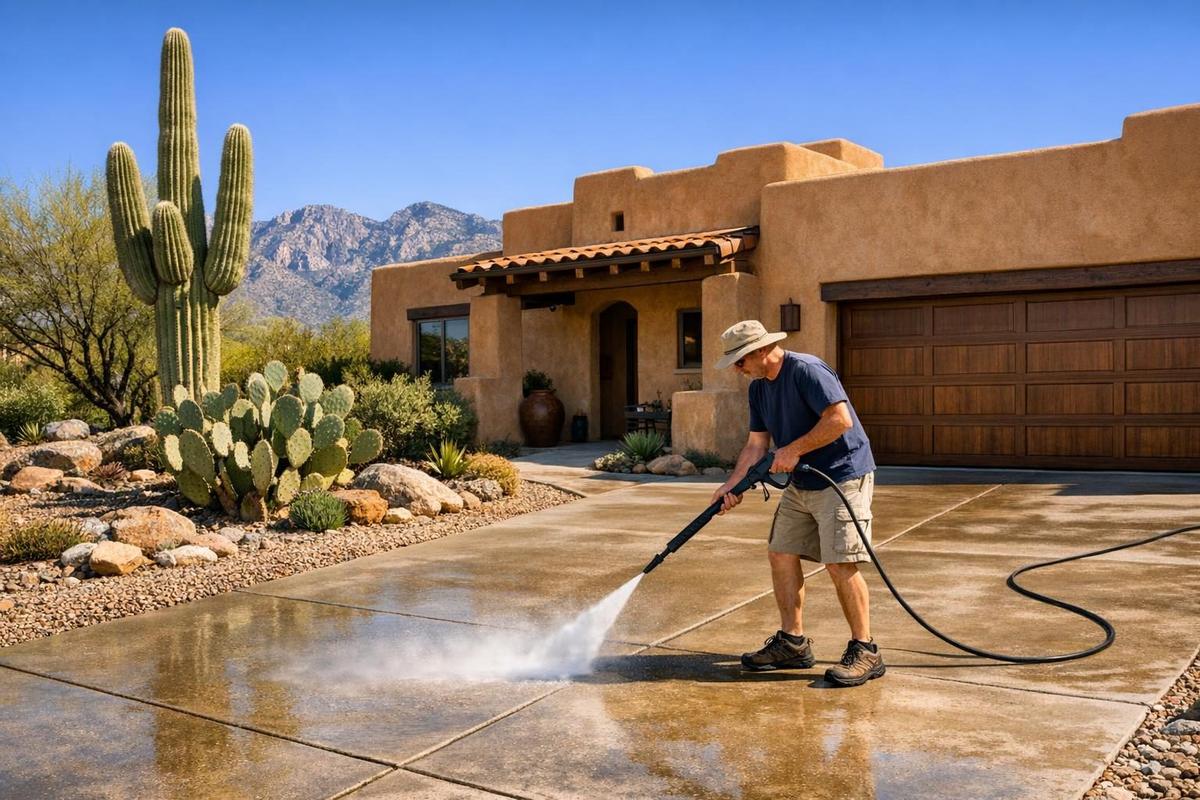
A concrete driveway in Tucson can last 25 to 30 years with the right care. The desert climate here brings intense UV exposure, triple-digit heat for months, and sudden monsoon downpours that test every slab poured in the city. Knowing how to maintain a concrete driveway saves you from costly replacements and keeps your property looking sharp. Most of the work is simple, takes less than an hour, and requires tools you already own.
Weekly Cleaning Keeps Surface Damage Away
Dirt, sand, and leaf litter grind against the surface every time a tire rolls over them. That abrasion wears through sealant faster than sun exposure alone. Sweep or blow off loose debris at least once a week, paying extra attention to edges where palo verde pods and mesquite leaves collect.
A garden hose handles light dust. For stuck-on grime, mix a tablespoon of dish soap per gallon of warm water and scrub with a stiff-bristle push broom. Rinse thoroughly so soap residue doesn’t attract more dirt. One thing most guides skip: avoid rinsing during peak afternoon heat. Water evaporates so fast on a 150-degree slab that it leaves mineral deposits behind, creating white streaks that are tough to remove later.
If you notice oil spots from parked vehicles, treat them within 48 hours. Fresh oil lifts out with kitty litter and degreaser. Old stains soak deeper into the pores and may need a poultice treatment or professional cleaning. Addressing spills quickly is one of the easiest ways to maintain your slab’s appearance over the long run.
Inspect for Cracks, Settling, and Surface Wear
Cracks wider than a quarter inch signal structural movement, not just surface shrinkage. Walk the full surface twice a year, once after monsoon season in October and once in late spring before the heat peaks. Look for three things: hairline cracks (cosmetic but worth sealing), wider cracks with vertical offset (possible subgrade failure), and areas where the surface feels rough or pitted (sealant breakdown).
Tucson’s expansive clay soils shift more than people realize. A slab poured on improperly compacted fill can settle unevenly within 5 years. If you spot a section that has dropped half an inch or more, that usually means the base material underneath has eroded. A properly thick slab resists this better, but even well-built surfaces need monitoring.
Write down what you find. Photos with a ruler next to each crack give you a baseline. Six months later, you can compare and see whether a crack is growing or stable. Stable hairline cracks are normal. Growing cracks need professional evaluation before they spread further.
Repair Cracks and Chips Before They Spread
Small cracks under a quarter inch respond well to a polyurethane or epoxy crack filler available at any hardware store. Clean out loose material with a wire brush, blow out dust, and apply the filler according to the product label. Most fillers cure in 24 hours, though Tucson heat can speed that up significantly.
Wider cracks or chipped edges call for a vinyl-patching compound. These patches bond best when the area is slightly damp, not soaking wet. After applying, feather the edges smooth so the patch blends with the surrounding surface. Curing usually takes 1 to 3 days depending on depth.
Spalling, where the top layer flakes off in coin-sized patches, is a common issue in areas that were finished too aggressively or sealed while still curing. A resurfacing overlay can fix widespread spalling without tearing out the entire slab. If spalling covers more than 30% of the surface, a full replacement is typically more cost-effective than repeated patching.
Seal the Surface Every 2 to 3 Years
Sealing is the single most impactful step you can take to extend the life of your slab. A quality penetrating sealer blocks moisture from entering the pores, reduces UV fading, and makes oil stains easier to clean. In Tucson’s climate, plan to reseal every 2 to 3 years. Acrylic sealers are popular for their finish, but siloxane-based products last longer in extreme heat because they don’t form a surface film that can peel.
Before sealing, the surface must be completely clean and dry. Pressure wash at no more than 1,500 PSI to avoid etching. Let the slab dry for 24 to 48 hours. Apply the sealer with a roller or pump sprayer in thin, even coats. Two thin coats outperform one thick coat every time because thick application traps moisture underneath and causes peeling within months.
Timing matters. Apply sealer in early morning or late evening when the surface temperature is below 90 degrees Fahrenheit. Hot slabs cause the sealer to flash-dry before it penetrates, leaving a weak bond. After 15 years of working on these projects, the number one mistake I see is homeowners sealing in the middle of a July afternoon and wondering why it flakes off by October.
If your existing coating is still in good condition, you can learn how long coatings typically last before scheduling your next application.
Add a Non-Slip Finish for Safety
Wet surfaces become slick, even in a desert city where rain is rare. Monsoon storms dump water fast, and a sealed slab with no texture becomes a hazard. Adding a non-slip additive to your sealer coat, such as aluminum oxide grit or polymer beads, creates traction without changing the look.
For new pours, a broom finish dragged across the wet surface provides permanent grip. Existing slabs can get a slip-resistant coating applied over the cured sealer. Either method adds safety with minimal cost.
Protect Your Slab from Vegetation and Root Damage
Tree roots are the silent threat most homeowners overlook. A mesquite or palo verde tree planted within 10 feet of the edge can send roots underneath the slab within 3 to 5 years, lifting sections and creating trip hazards. If you already have trees close to the surface, install a root barrier, a rigid plastic sheet buried vertically between the tree and the slab to redirect growth downward.
Fallen berries, seed pods, and sap also cause staining. Tucson’s native palo verde trees drop thousands of small pods each spring. Left sitting on the surface for a week, those pods leave rust-colored marks that penetrate through sealant. Sweep them up within a few days, or blow them off during your regular weekly cleaning.
There are real benefits to choosing a concrete surface for your property, but those benefits depend on keeping organic debris from degrading it over time.
Watch Vehicle Weight and Parking Habits
A standard residential slab is 4 inches thick and rated for passenger vehicles up to about 8,000 pounds. Parking a fully loaded RV, a dump trailer, or heavy construction equipment on a residential-grade surface risks cracking the slab from beneath. If you regularly park heavier vehicles, consider a thicker pour, typically 5 to 6 inches with reinforced rebar or fiber mesh.
Parking in the same spot every day concentrates wear on one section. Alternate positions when practical. Also avoid turning the steering wheel while the vehicle is stationary, a habit called dry steering. That twisting motion grinds the tire against the sealer and accelerates surface wear in one concentrated area.
When to Call a Professional
Not every repair is a weekend project. Call a contractor when you see cracks that run the full width of the slab, sections that have settled more than an inch, or widespread spalling across large areas. A professional can evaluate whether mudjacking (pumping material under the slab to raise it), polyurethane foam injection, or a full replacement makes the most sense for your situation.
If you are planning a new installation or a full replacement, reviewing design tips for your layout can help you get a longer-lasting result from the start. Getting the subgrade, thickness, and joint spacing right during installation prevents most of the maintenance headaches discussed in this guide.
Start by walking your slab this weekend. Look for cracks, check the sealer condition, and sweep off any debris. Tackling the small issues now is the fastest way to maintain a concrete driveway and avoid expensive repairs down the road. If the surface shows heavy wear or structural cracking, schedule an inspection with a local contractor before the damage spreads further.
Frequently Asked Questions About Concrete Driveway Care
How often should you seal a concrete driveway in Tucson?
Seal every 2 to 3 years in Tucson’s climate. The intense UV and heat break down sealers faster than in cooler regions. If water no longer beads on the surface, it is time to reseal regardless of the calendar.
Can you pressure wash a concrete driveway without damaging it?
Pressure washing is safe when you keep the setting at or below 1,500 PSI. Higher pressure can etch the surface, remove sealant, and open up micro-cracks. Use a fan-tip nozzle rather than a zero-degree tip to spread the force evenly.
What causes cracks in a concrete driveway?
Cracks form from three main causes: soil movement underneath the slab, thermal expansion and contraction cycles, and heavy vehicle loads exceeding the design capacity. Properly spaced control joints, adequate thickness, and good subgrade compaction minimize all three risks.
Does a concrete driveway increase home value?
A well-kept surface adds curb appeal and can increase your home’s resale value. Buyers notice cracked or stained surfaces immediately, so regular care directly protects your investment.
How do you remove oil stains from a concrete surface?
Fresh oil stains respond best to absorption first. Cover the spot with kitty litter or baking soda for 24 hours, then sweep it up and scrub with a degreaser and stiff brush. Older stains may need a poultice made from acetone and an absorbent powder, applied and covered with plastic for 24 hours before removal.
Is it better to repair or replace a cracked driveway?
Isolated cracks under a quarter inch wide are easily repaired with filler. When cracks cover more than 30% of the surface, or when sections have settled more than an inch, replacement is usually the more economical long-term choice. A contractor can evaluate the subgrade condition to help you decide.